 Rocket - Think it. Type it. Launch it.
 Mini tools




 Younet
 CleeAI
 Avataar's GenAI Creator
 Activepieces
 BigTeam
 Olivya
 Abstra
 Pipefy
 DoubleO
 Sreda.ai
 AI Agents
 Neferdata
 Quixl
Quixl
 Cubeo
Cubeo
 Sema4.ai
 Ridvay
 Cognition by Mindcorp
 Tray.io
 UiPath
 Mr David
 Belva
Belva
 Mistral AI Studio
 Elham.ai
 LangWatch
 Superface
 Aicado AI
 BotX
BotX
 Buildship
 Geekflare Connect
 Retool
 Emly Labs
 Api4ai
 Aureo
Aureo
 Kortical
 Hopsworks
 BraintrustData
 iyed
iyed
 Intelligent Internet
 Momo
Momo
 Zues
Zues
 Dobb-E
 Jacobi Robotics
 R Dog | Robot.com
 RobCo AI Robots
 Franka Research 3
 Gemini Robotics
 Physical AI | Universal Robots
 temi Robots
 OTTO Autonomy
 Spot | Boston Dynamics
 Palladyne AI
 Sophia - Hanson Robotics

Starship Technologies
 Sherlocks.ai
Overview
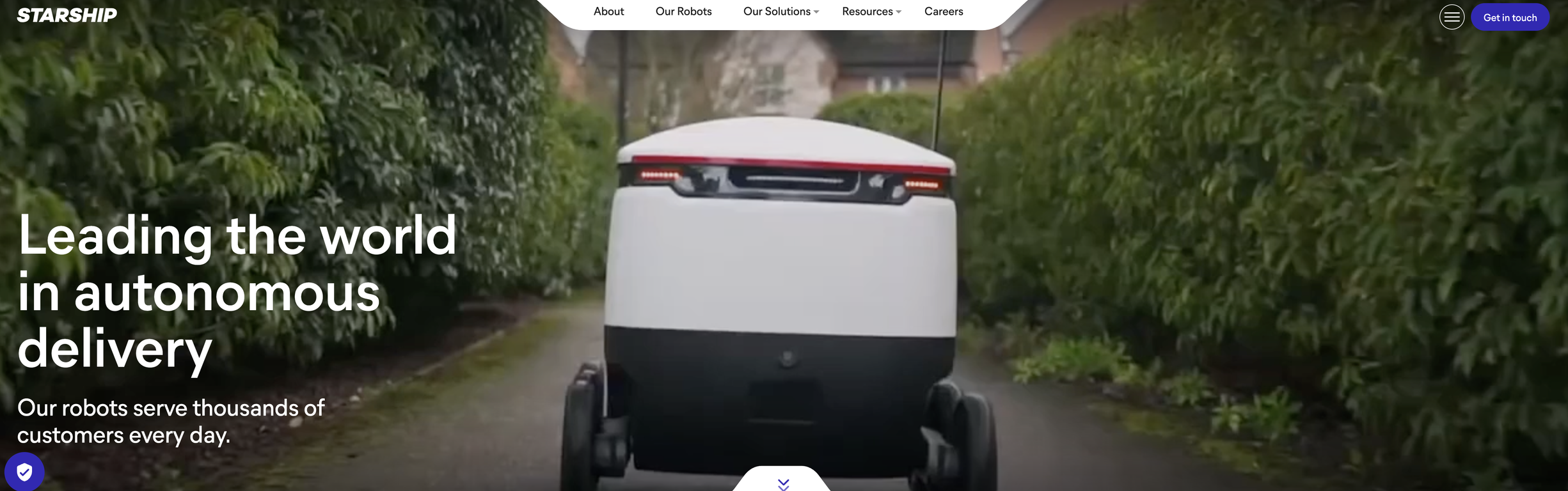
Starship Technologies specializes in leading the world in autonomous delivery with its Level 4 autonomy robots. These robots, operating with 99% autonomy, utilize a number of technologies including radars, cameras, sensors, and machine learning to recognize objects and navigate their surroundings.
They facilitate the delivery of hot food, groceries, and industrial supplies, serving adequate solutions to thousands of customers daily. The robots have been integrated in different settings such as university campuses, grocery retailers, delivery apps, and industrial settings, aiding in efficient, cost-effective and sustainable practices for last-mile delivery.
They have transformed daily operations on university campuses, making life easier for students and staff, and have partnered with grocery retailer chains to promote efficiency in hyper-local grocery delivery.
Their integration into delivery apps has resulted in enhanced user experience through more downloads, increased order volume, and higher customer satisfaction.
In industrial sites, the battery-powered robots serve in secure delivery of spare parts, internal mail and samples, seeming as an intelligent, cost-saving solution.
Further, Starship Technologies provides an advertising medium, giving brands a unique platform to reach their target audiences. On a larger scale, it continually strives to revolutionize last-mile delivery for a more sustainable future globally.
Releases
Pricing
Top alternatives
-
 AI service robot that revolutionizes hospitality operations.Open


Related topics
 0
0





How would you rate Starship Technologies?
Help other people by letting them know if this AI was useful.