 Tripo AI 3D Generator

 Mini tools
Ianis Pavel's tools
-
 Unleash linguistic creativity with AI-powered storytelling tools.Open
-
 Open## Overview of Velurian Velurian is a constructed language derived from American English with significant sound changes, retaining dental fricatives. It is characterized by a fusional grammatical structure. ### Phonetic Style The phonetic style of Velurian is harsh with a melodic twist, incorporating a range of consonant and vowel sounds that give it a distinctive feel. ### Cultural or Thematic Influences Velurian draws inspiration from American culture and history, with influences from the early 20th century. It reflects a blend of industrial and natural themes. ### Grammatical Structure The grammatical structure of Velurian is fusional, with a focus on inflectional endings to denote grammatical relationships. ## Phonology ### Phonetic Alphabet Velurian's phonetic alphabet includes: - Vowels: *a, e, i, o, u, ɛ, ɔ, ʊ* (with additional diphthongs *ai, au, oi*) - Consonants: *p, t, k, m, n, ŋ, f, v, θ, ð, s, z, h, j, w* ### Sound Changes Significant sound changes from American English include: - *th* sounds remain as *θ* and *ð* - *v* often shifts to *b* - *r* is pronounced after vowels - Diphthongs are more pronounced ## Vocabulary Basic vocabulary in Velurian includes: - Hello: *zorvɛn* (derived from "serve" and "even") - Water: *wɔtər* (retains the American English pronunciation) - Sky: *skai* (influenced by "sky" and "high") - Earth: *ɜrθ* (emphasizes the *th* sound) ## Grammar ### Fusional Structure Velurian uses inflectional endings to indicate grammatical case and number. ### Verb Conjugation Verbs change based on tense and subject: - To run: *rʊn* (base form), *rʊnɛ* (first person singular present), *rʊnɔ* (third person singular present) - Past tense often marked with *t* or *d* suffix ### Example Sentences - *Mi zorvɛn θu.* (Hello to you.) - *Vi wɔtər ɪs kold.* (The water is cold.) - *Skai ɪs blau.* (The sky is blue.) ## Conclusion Velurian is a unique conlang that blends American English with distinctive sound changes and a fusional grammatical structure. It is designed to reflect a culture inspired by early 20th-century America with a mix of industrial and natural themes.
 -
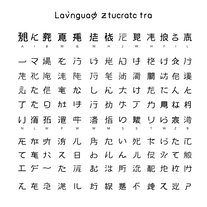 Open# The Sibilant-Tonal Language Family ## Key Phonetic Features The Sibilant-Tonal language family is characterized by: - A large inventory of sibilant consonants, including: - Alveolar, postalveolar, and retroflex sibilant fricatives and affricates - Voiced and voiceless sibilants - Ejective sibilants - Complex tonal systems with 4-6 contrastive tones - Lack of labial consonants - Vowel harmony based on tongue root position - Syllable-final consonant clusters ## Historical and Cultural Context This language family likely developed in a mountainous region with isolated valleys, allowing for the preservation of unusual phonetic features. The cultures that speak these languages traditionally place great importance on oral storytelling and poetry, leading to the development of complex tonal systems for expressive purposes. ## Sample Languages ### 1. Zishān **Consonant Inventory:** /s z ʃ ʒ ʂ ʐ t͡s d͡z t͡ʃ d͡ʒ ʈ͡ʂ ɖ͡ʐ s' ʃ' ʂ' t h ɲ ŋ/ **Vowel Inventory:** /i ɨ u e ə o a/ **Tones:** 5 level tones (˥ ˦ ˧ ˨ ˩) **Example word:** /ʃa˥ʂə˩/ - "mountain" ### 2. Xisúth **Consonant Inventory:** /s z ɕ ʑ ʂ ʐ t͡s d͡z t͡ɕ d͡ʑ ʈ͡ʂ ɖ͡ʐ θ ð c ɟ k g x ɣ/ **Vowel Inventory:** /i y ɯ u e ø ɤ o ɛ ɔ a/ **Tones:** 4 contour tones (˥˩ ˩˥ ˦˨ ˨˦) **Example phrase:** /ɕi˥˩θu˨˦ ʂa˩˥ɕø˦˨/ - "flowing river" Both languages exhibit the characteristic features of the Sibilant-Tonal family, including complex sibilant inventories, tonal contrasts, and a lack of labial consonants. They differ in their specific consonant and vowel inventories, as well as their tonal systems, demonstrating the diversity within the family.
 -








 ningningist🙏 6 karmaApr 17, 2026@Create Ethnicity FaceNot listening to instructions at all. Very trash.
 -
Based on your description, I've created a unique baby name that combines elements of Filipino and German cultures. **Name:** Fayeza Allegra **Meaning:** Fayeza is a Filipino name that means "happiness" or "joy", while Allegra is a German name that means "cheerful" or "lively". **Breakdown:** * Fayeza is a unique and rare Filipino name that reflects the cultural heritage of the Philippines. * Allegra is a German name that adds a touch of European flair to the overall name. **Pronunciation:** FAY-zah AH-leh-gruh This name combines the happiness and creative spark you mentioned, with a touch of fantasy and cultural heritage from both Filipino and German roots. What do you think?