Mini tools
-
 hamed elghoul🙏 50 karmaMar 19, 2025@Whiteboard by Athena AIWhiteboard by Athena AI is a user-friendly, AI-powered tool that makes digital collaboration seamless. supports real-time brainstorming, and integrates easily with other apps—ideal for teams, educators, and remote learners alike.
 -

-
 Boost your creativity with AI-powered brainstorming.Open
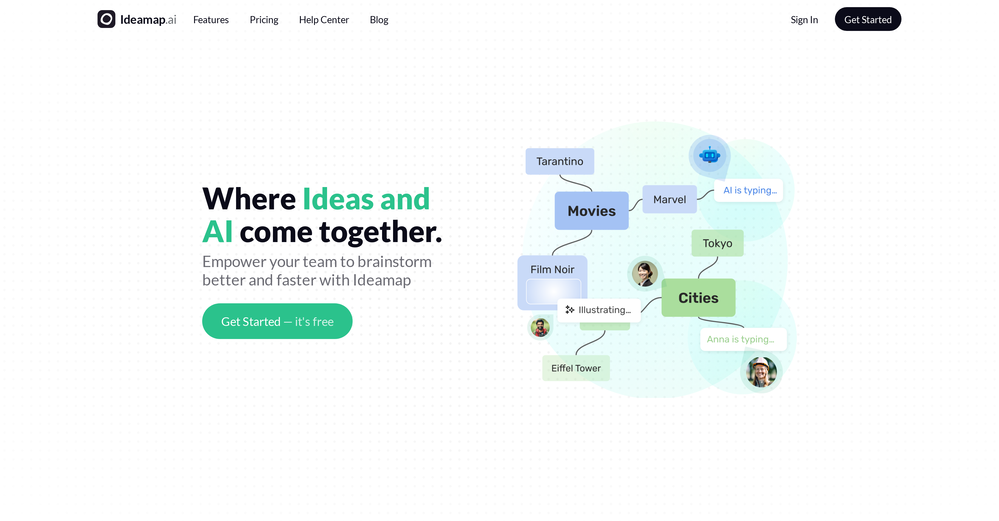 I can't explain how impressed i am by this. I've seen tools to help you brainstorm ideas, but not one to break your task down into big steps, then little steps for each of these. Plus "games" to help come up with more ideas for your project. I'm excited to use this!
 -
**Main Theme:** Mental health and self-care wellness app **Concept Ideas:** 1. **MoodMirror** - Audience: Adults struggling with mood disorders - Objective: Track and visualize mood patterns over time - Features: - AI-powered mood analysis based on facial expressions, voice tone, and text entries - Personalized insights and coping strategies - Integration with wearable devices to correlate mood with physical indicators 2. **MindfulMe** - Audience: Busy professionals experiencing stress and burnout - Objective: Encourage regular mindfulness practice - Features: - Micro-meditation sessions (1-5 minutes) tailored to specific situations - Augmented reality guided visualizations - Haptic feedback reminders for mindful breathing throughout the day 3. **SocialSync** - Audience: Individuals with social anxiety or difficulty maintaining relationships - Objective: Improve social connections and communication skills - Features: - Virtual reality social scenarios for practice - AI chatbot for conversation rehearsal - Anonymous peer support network with guided discussion topics 4. **SleepSculptor** - Audience: People with sleep disorders or irregular sleep patterns - Objective: Optimize sleep quality and routines - Features: - Smart alarm that wakes users at the optimal point in their sleep cycle - Customizable soundscapes that adapt to environmental noise - Sleep behavior analysis with actionable recommendations 5. **NutriNurture** - Audience: Those looking to improve mental health through nutrition - Objective: Promote a brain-healthy diet - Features: - Personalized meal plans based on mood tracking and nutritional needs - Augmented reality grocery shopping assistant for identifying brain-boosting foods - Integration with food delivery services for convenient, healthy options **Creative Direction Summary:** These concept ideas for a mental health and self-care wellness app focus on leveraging technology to provide personalized, accessible, and engaging solutions for various aspects of mental well-being. The concepts incorporate emerging technologies like AI, VR, and AR to create immersive and adaptive experiences. As these ideas evolve into tangible projects, developers could focus on: 1. Ensuring strong data privacy and security measures 2. Collaborating with mental health professionals to validate and refine features 3. Conducting user testing to optimize user experience and engagement 4. Exploring integration with existing health platforms and wearable devices 5. Developing a scalable infrastructure to support personalized recommendations By combining innovative technology with evidence-based mental health strategies, these concepts have the potential to create a new generation of wellness apps that offer more comprehensive, personalized, and effective support for mental health and self-care.
-
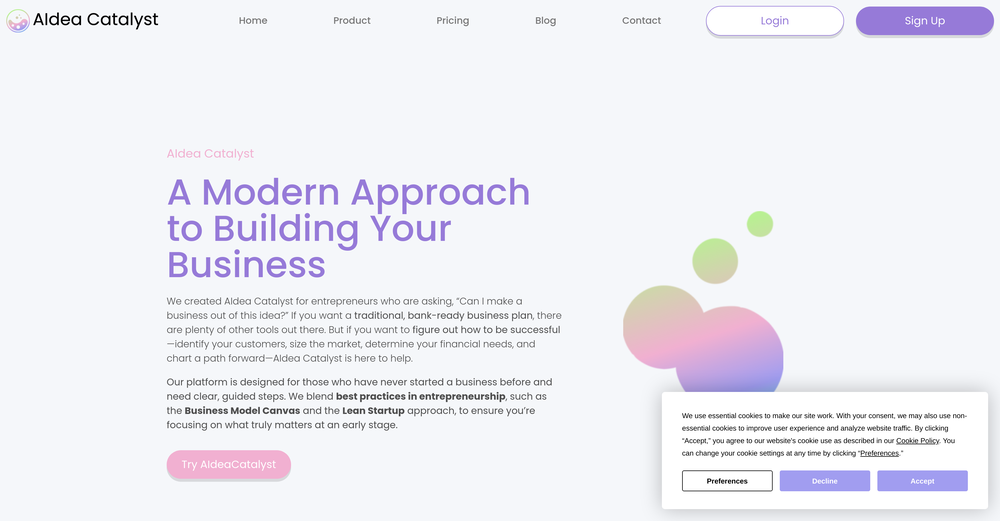 Hi Lana, Thank you so much for trying AIdea Catalyst. I am sorry to hear about your frustration. I received your emails and I am going to respond to them separately. In any event, I wanted to assure you that your credit card will not be charged. Also, FYI, for the future, here are the steps that you would go through to manually cancel your account: (1) login to the app, (2) choose any plan that you previously created, (3) click on the Account button in the lower left corner, (4) click on the link in the Accounts page to go to Stripe payment console. I hope this solves the problem you reported. If there is anything else I can help with, please let me know. -- Matthew
 -

-
 Smooth and on-point experience. I asked Reggi for some secrets about the restaurant industry, and he really hit me up with some great insights.
 -
 I love it—just what I was looking for! A great addition would be to provide some coverage information, perhaps how many books have been vetted as part of the query or how recent the books in the training corpus are.
 -
 Good ideas and very straight to the point though it only uses Amazon to search limiting what products actually exist but overall a good way to get an idea of where to go next.
 -
 Open
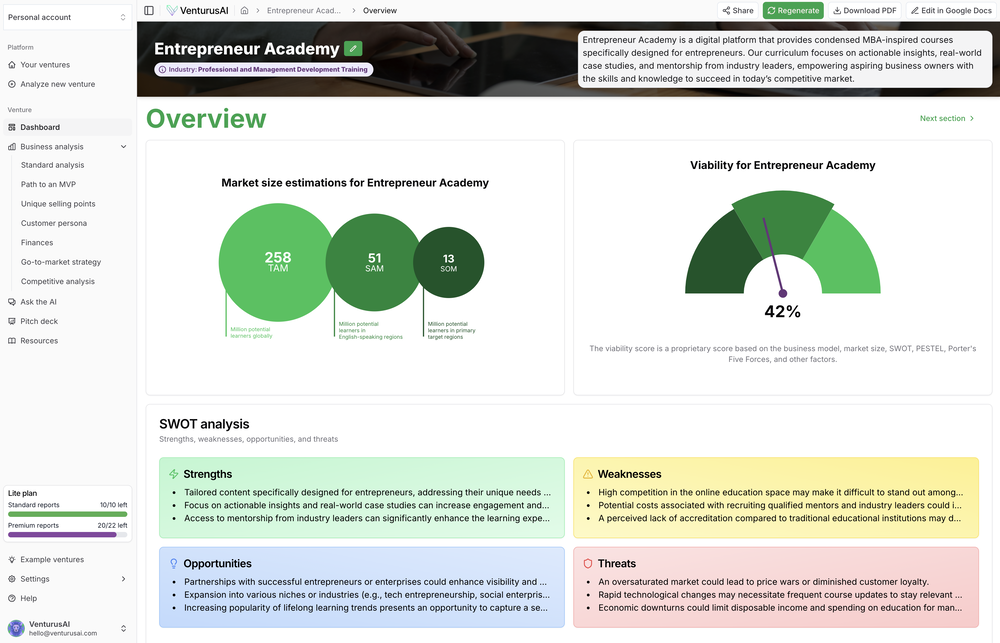
Open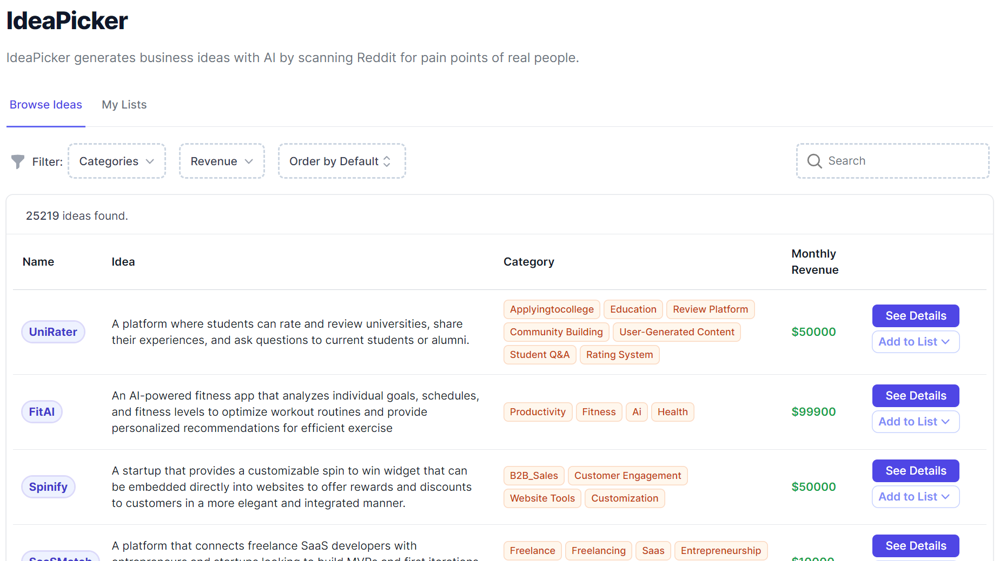 Yes that's a good idea, I'll create a field for initial investment. Thank you!
 -
 Clicked on the suggested domain links and worked fine. Simple to use, practical, and effective for searching for new domains.
 -
-
 Hi there, send us an email at [email protected] with a screenshot and we'll have a look. We already checked it on our end and it seems that everything works as expected and no one else reported this issue yet. Thanks!
Sponsor RocketVibe coding
#1 website for AI tools.Used by 70M+ humans.