 Base44 Superagents-AI agent that does it all
 Mini tools
 freebeat AI
 D-ID
D-ID
 MagicLight
 HeyGen
 Kaiber
 Sora
Sora
 Seedance
 AI Video Generator by RenderFlow AI
 Kling
Kling
 BeatViz AI Music Video Generator
 neural frames
 ViGi
ViGi
 Videnly
 Viddo AI - AI Video Generator
 Chraft AI
 D-ID Creative Reality Studio
 VideoGen
 AI Studios
 CreatorFrames
 Aura AI - AI Video Generator
 So You Want To Be A Writer?
 Ancient AI powered spirits
 Minka
Minka
 Jvb ai
 somacguffin
 Cuty
Cuty
 Superfly Stoner







Overview
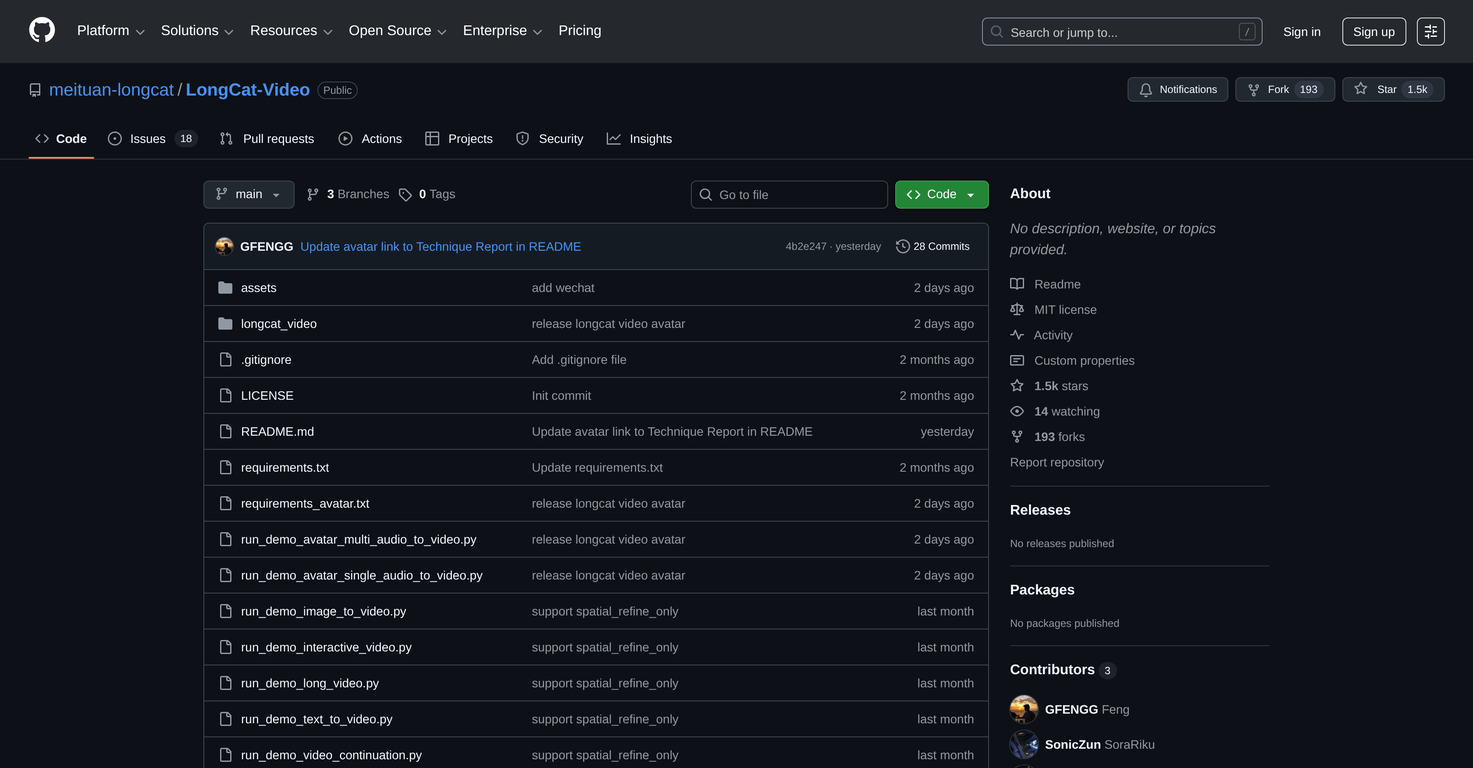
LongCat-Video is a comprehensive video generation model by meituan-longcat developed on GitHub. This AI tool is designed to execute multiple tasks within one video generation framework, including converting text to video, translating images into video sequences, and generating continuation in videos.
One key feature of LongCat-Video is in its ability to efficiently create long videos without reduction in quality or noticeable color drifting. It follows a coarse-to-fine generation strategy along both temporal and spatial axes to enhance efficiency, especially at high resolutions.
The model was trained through Group Relative Policy Optimization, which incorporates multi-reward Real-life High Fidelity (RLHF) and ensures competitive performance across multiple metrics when compared to leading open-source and commercial video generation models.
Moreover, the AI model has launched an expressive audio-driven character animation feature, known as LongCat-Video-Avatar, which can natively handle tasks such as Audio-Text-to-Video conversion, Audio-Text-Image-to-Video generation, and Video Continuation.
It offers seamless compatibility for both single-stream and multi-stream audio inputs. All technical reports, inference code, model weights, and project pages related to LongCat-Video are openly available on GitHub.
Releases
Top alternatives
-
 kanawati🙏 1,140 karmaMar 26, 2025@freebeat AIThe concept is great.
 -
WE USE D-ID AT THE COLORADO VIRTUAL CREATIVE FACTORY...AND LOVE IT.
-
You get 300 credits upon signing up, which is enough to test out the app and see its potential. I had a bit of fun with it. It takes a few minutes to generate content, but the results are impressive. There are many styles, modifiers, and customization options available. I would definitely use this for content creation or storytelling.
-
-
They're dreaming if they think I'd give them my credit card info just for a free trial. Most useless thing ever...
-


Related topics
 0
0