TAAFT Tutorial
Generate image
Tasks
Generate text
Free mode
Trending
Leaderboard
Characters
 Mini tools
New
Featured
Lists
Agents
Requests
Jobs
Map
Newsletter
Starter pack
Free tools
Speech to text
Text translator
Remove background
Settings
Edit profile
My tools
Gallery
Dashboard
Inbox
Get featured
Contact TAAFT
For you
Popular
Job impact index
Most saved
Affiliate program
Submit AI tool
Notification preferences
Glossary
Home
Timeline
My profile
Create tool
Deals
Companies
Models
Robots
Papers
Fundraises
Repositories
Devices
Organizations
Events
Prompt Pack
Merchendise
APIs
Features
Tools
Countries
Collections
Videos
Mini tools
New
Featured
Lists
Agents
Requests
Jobs
Map
Newsletter
Starter pack
Free tools
Speech to text
Text translator
Remove background
Settings
Edit profile
My tools
Gallery
Dashboard
Inbox
Get featured
Contact TAAFT
For you
Popular
Job impact index
Most saved
Affiliate program
Submit AI tool
Notification preferences
Glossary
Home
Timeline
My profile
Create tool
Deals
Companies
Models
Robots
Papers
Fundraises
Repositories
Devices
Organizations
Events
Prompt Pack
Merchendise
APIs
Features
Tools
Countries
Collections
Videos
Mini tools
New
Featured
Lists
Agents
Requests
Jobs
Map
Newsletter
Starter pack
Free tools
Speech to text
Text translator
Remove background
Settings
Edit profile
My tools
Gallery
Dashboard
Inbox
Get featured
Contact TAAFT
For you
Popular
Job impact index
Most saved
Affiliate program
Submit AI tool
Notification preferences
Glossary
Home
Timeline
My profile
Create tool
Deals
Companies
Models
Robots
Papers
Fundraises
Repositories
Devices
Organizations
Events
Prompt Pack
Merchendise
APIs
Features
Tools
Countries
Collections
Videos

▼ Popular
Slidesgo
Free mode
100% free
Freemium
Free Trial
Featured matches
-
 First General AI Agency. Designed for long-horizon tasks.Open
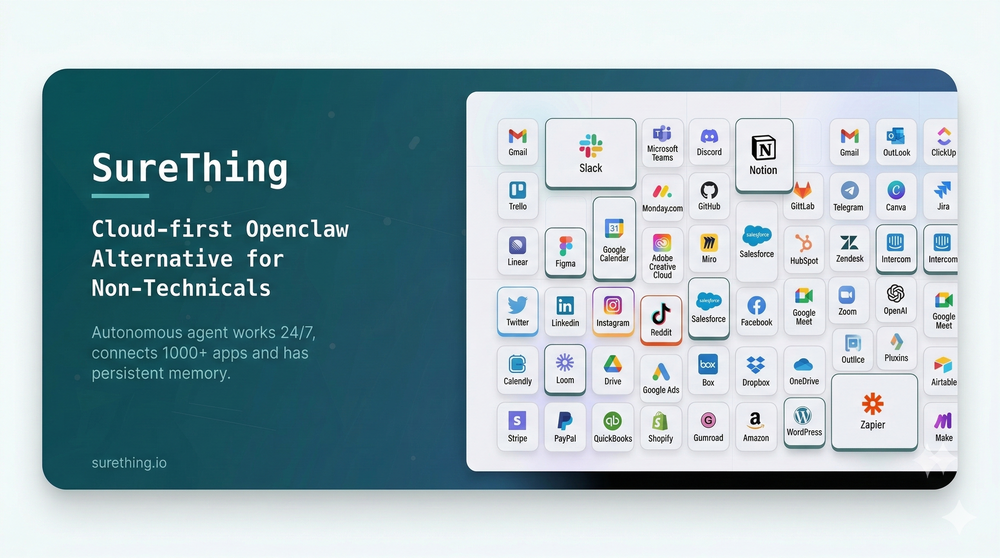 Bonnie🙏 24 karmaMar 5, 2026@SureThing.io - "OpenClaw" for BeginnersI've put about 30-40 hours into SureThing, and it's seriously been a game-changer, basically acting like a virtual COO for my business!
 -
-
 Create custom AI gaming companions with voice chat and live screenshare.Open
 What’s New: 🔍 Game IQ: Questie is trained for gaming. Select the game you're playing and your Questie AI game companion will receive specialized game context to assist you in real-time 🎲 Roll Dice Ability: You can now roll a random dice (d20) like D&D! Level up your roleplay and see what fate has in store for you. When you roll a dice, your Questie AI companion reacts to your result. 📱 Mobile App: Queste is now on mobile! Get the same voice chat, game vibes, and AI roleplay in your pocket. Now you can chat with your companion while you're on the go. App Store: https://apps.apple.com/us/app/ai-chat-for-games-questie/id6767389926 Google Play: https://play.google.com/store/apps/details?id=ai.questie.www.twa
 -
-
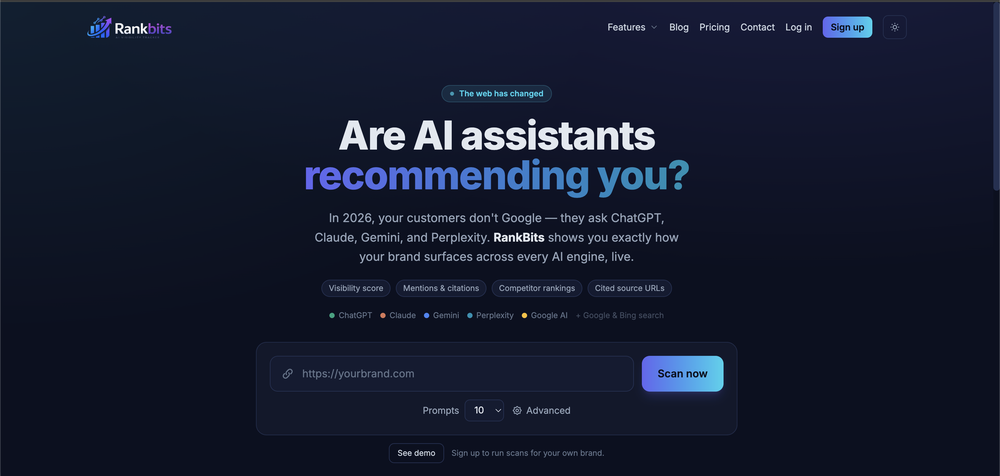
-
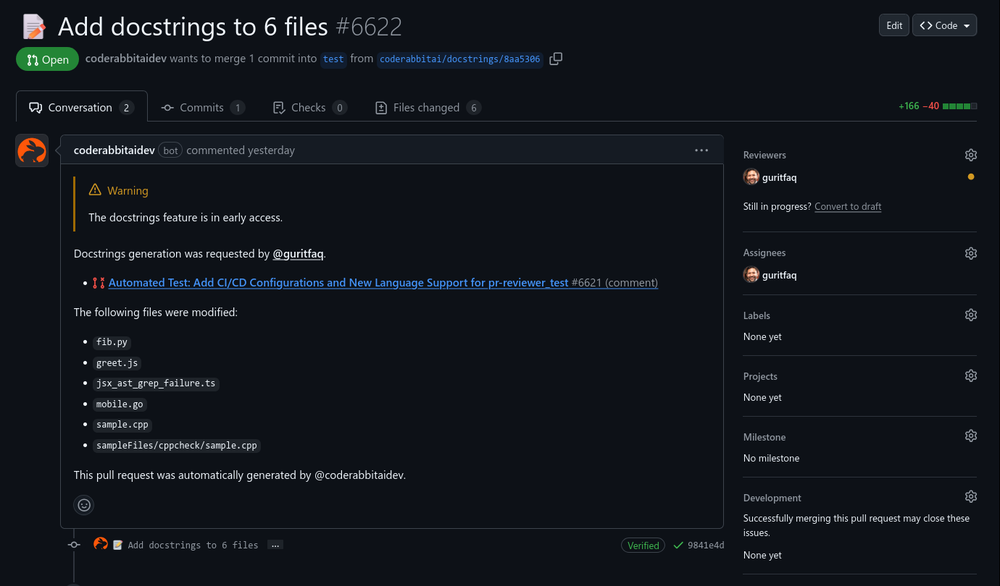 Reducing manual efforts in first-pass during code-review process helps speed up the "final check" before merging PRs
 -
 Open
Open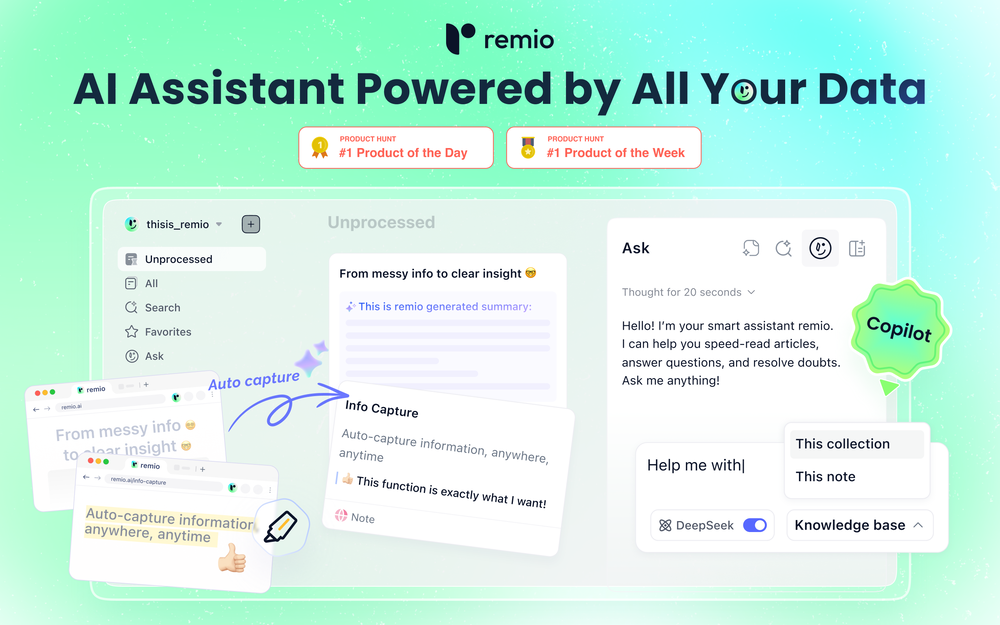 Most AI tools start from zero. You paste in context, re-explain your work, and hope the output is relevant. Every. Single. Time. remio is different. It automatically captures everything you work on — web pages you browse, documents you read, meetings you record, emails you send — and turns it all into a living, private knowledge base. No manual tagging. No copy-pasting. No setup. Then, when you need to get something done, remio already knows your context. Write a doc, draft an email, generate a report, create slides — just tell it what you need. It pulls from your actual work history to produce output that's genuinely relevant to you. What makes remio different: 🧠 Passive, automatic context capture — works silently in the background 🔒 Local-first & privacy-focused — your data stays on your device ⚡ BYOK support — bring your own API key from OpenAI, Google, DeepSeek and more 🖥️ Local model support via Ollama 📎 Connects to Gmail, Google Docs, local files, YouTube, and more 🛠️ Build reusable aApp workflows powered by your own knowledge This is not another note-taking app. This is your personal agent — one that already knows your world. From knowledge to getting things done. 👉 Try remio today.
 -
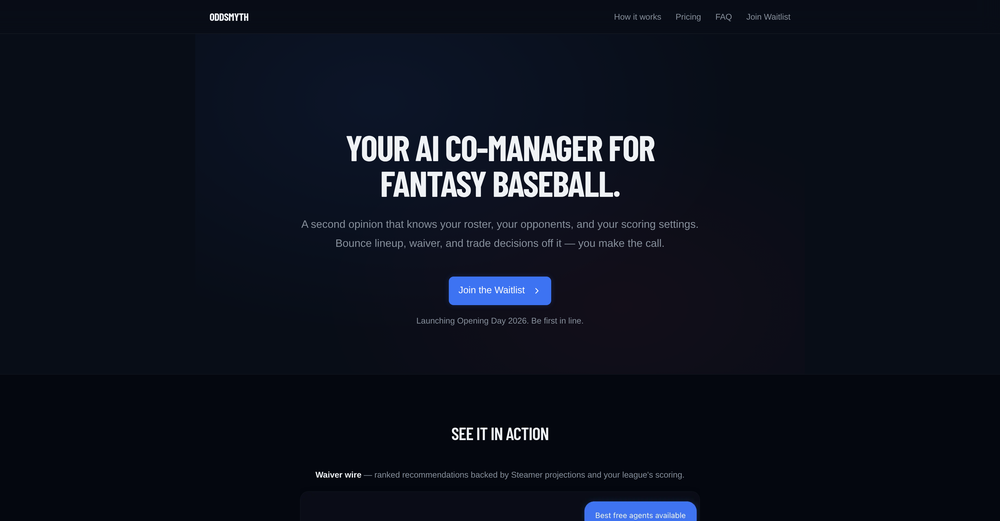 Hey! I'm Kwan, the solo founder behind Oddsmyth. I built this because I play in 2 Yahoo H2H fantasy baseball leagues and was spending 30+ minutes every morning researching lineups, scanning the waiver wire, and evaluating trades. The tools I tried (FantasyPros, Yahoo's built-in recs) all had the same problem: they don't know my league. They give generic advice based on generic rankings. Oddsmyth connects to your Yahoo Fantasy league and actually knows your roster, your opponents, your scoring settings, and who's available on your waiver wire. You can ask it anything in plain English ("who should I start today?", "is this trade worth it?", "who should I grab off waivers?") and it gives you a specific answer with reasoning based on your situation. It's not meant to replace doing your own research. It's a second opinion you can bounce decisions off of when you're torn on a close call or managing multiple leagues and don't have time to dig into every decision. The AI is powered by Claude and uses live data from the MLB Stats API, FanGraphs Steamer projections, and your Yahoo league data. You get 5 free credits to try it. Quick questions (game times, scores, injury checks) are always free. I'd love feedback from anyone who plays Yahoo fantasy baseball. What's working, what's not, what would make it more useful. I'm building this in public and actively improving it based on what real users tell me.
 -
-









Other tools
- Sponsor
 Tripo AI 3D Generator
 -
Its a promising project and works well so far. Wishing them all the best and godspeed.
-
The generation speed is very fast, and having access to multiple mainstream models on a single platform — including the latest ones like Seedance2 and GPT Image2 — is great. The pricing is really affordable. I've already become an annual member.
-
 Enterprise-grade open-source AI inference at unlimited scale.Open
 -
This is exactly what we have been looking for. Can't wait to run it
-
I've been playing around with this for a few hours. It's made me say "WOW" too many times than i wish to admit. I'm going to follow this and see how it evolves. For now, i managed to create quite a nice Expenses app for personal use. | It did have some problems when it came to moving some components on other pages, but for how short the prompts it uses can be, it is really impressive. With some proper prompts it can generate some strong stuff.
-
 Open
Open -
- Didn't find the AI you were looking for?
-
It’s an very interesting project, it helps me a lot to speed up my process.
-
 OpenI found out this girl i was talking to was catfish, and just promoting her OF account
 -
Hi Rod, you did not click the "include" for each section you wanted to include. I did that for you so you can now see your page. Looks good so far.
-
WhatsApp and Messenger integrations don't work very well. Support team is very sporadic. Still couldn't get it to work consistently despite best effort to fix.
-
-
-
Tired of wrestling with complex formulas, spending hours cleaning data, and struggling to create the right charts? Excelmatic is a powerful web-based AI agent designed to revolutionize your relationship with spreadsheets.
-
I am planning to automate my trading system and customise an agent , I chatted with the support right from the dashboard they answered in 15 mins
-
Very happy with this tool. It has everything to make my work loads faster
-
My favourite AI application. Great clean UI and even better pricing.
-
-
 Rename, organize, and search files by content with local AIOpen
 -
This tool is awesome! The metrics are really interesting and useful.
-
Thanks for the feedback! Would love to hear what you’d like to see next
-
We’ve just launched CASi Scout — a product that helps writers generate smart, relevant content ideas based on breaking news, strategic angles, and their client’s audience and product.
-
Like copilot, but for power users. Nice for my n8n workflows command center
-
-
 Your AI stream companion that entertains chat and boosts tipsOpeninteresting tool, thank you
 -
-
-
Looks pretty clean and easy to use! The upload process is straightforward, though the top section feels a little crowded. Maybe add a bit more info about how the credits work.
-
-
 Pay-as-you-go productivity. Meeting transcription at $0.25/hour, AI tasks, document search — noOpenKolva is a game changer! I use it almost every day and works every time! can't recommend it enough! I use it for every meeting. Give it go!
 -
The models here really help w/ finding investment properties.
-
 Your AI-powered file organizer that respects privacy for macosOpenGood Replacement for the sparkle. Keep it up
 -
Great tool for engaging customers and repurposing content! I also made a video on it https://youtu.be/cIEUz3bxPRc
-
Base44 Superagents is an AI tool that designs personalized AI agents to automate various tasks without requiring any coding. It offers users a platform where they can deploy apps that are built specifically for AI agents.
-
 Open
Open -
⚙️ Reliability & Stability Improvements • Improved plugin recovery mechanisms • Better data merge handling during restarts • More resilient operation across updates and container restarts • Improved platform stability and recovery behavior
-
Reddit's been a blind spot for us forever and this actually makes it manageable. The AI catches relevant threads before they blow up so we can jump in early. Organic reach has been wild compared to paid channels.
-
-
 One-click OpenClaw setup with AI inference included, no token capOpenAwesome idea to have a unlimited token plan tied directly to a managed opnclaw instance. A little bit tricky to get setup without CLi access. but seems to work well once you get past that!
 -
-
Protaige really made my life easier in creating Campaign across different platforms in a single click just by providing my Briefs. Thank you! Awesome Time Saving AI Tool. Really loved using it.
-
-
Incredibly easy way to connect to Amazon products and pull information
-
As someone who's worked with food businesses, I know how crucial visual appeal is for driving sales - especially in the digital space where customers make split-second decisions based on photos. What stands out to me is how this tool addresses a real pain point. Professional food photography is expensive and time-consuming, but this AI solution makes high-quality food images accessible to everyone from small restaurants to food bloggers. The instant transformation aspect is particularly valuable for businesses that need to update their menus frequently or manage multiple locations. I can see this being a game-changer for food delivery apps where compelling visuals directly impact order volume. The fact that it's specifically trained for food photography rather than being a generic photo enhancer shows thoughtful development. Would love to see some before/after examples if the developers are sharing any - the concept is solid and fills a clear market need. Definitely keeping this on my radar for future projects!
-
Used this for scheduling my last 3 interviews and honestly forgot how annoying it was before. One company wanted to do 4 rounds and instead of me going back and forth with their HR person a dozen times, Workmate just handled it. Saved me from that weird anxiety of 'did I respond fast enough' or 'is this time actually gonna work.'
-
-
 Pencil’d Answers Calls, Books Appointments, and Captures Leads when you’re not available.OpenGreat product, helps me run my one-person shop without having to hire a separate assistant.
 -
I gain time with TopFrog! It is very helpful, and I recommend it highly!
-
Helping brands get more traffic and conversion from AI search in the most effective way. Also including AI presence management features for individuals.
-
Ahaha Sam was really nice to me, we did some brainstorming together. It s great for getting some strategies ideas, especially if you have a small business like me
-
-
I would like to ask if is possible to boost APP (APPSTORE) sale.
-
Been looking forever to find an app like this! Reviews supplement and provides helpful information to optimize your health
-
-
Does what it says. Signed up, picked a pre-built agent, live in under a minute. Token savings are noticeable, security is handled, and I don't have to think about Docker or VPS configs anymore. Free tier is enough to know if it works for you. It did for me.
-
Building multi-agent AI systems shouldn’t require wrestling with messy Python boilerplate, cloud subscription or complex local setups. I built AgentSwarms (AgentSwarms.fyi) to solve this. It’s an interactive, in-browser visual sandbox for learning, building, testing, and orchestrating multi-agent AI workflows. Instead of relying on a single AI chatbot that easily hallucinates, AgentSwarms lets you drag and drop specialized AI agents—like data extractors, code reviewers, and SQL query nodes—to handle complex tasks reliably. Key features for builders: Visual Edge Tracing: Stop guessing why your AI failed. Click any connection line to see the exact JSON data passing between agents in real-time. In-Browser Execution: Powered by local DuckDB WASM. No backend setup required. Enterprise Templates: Test reverse-engineered Agenitic AI architectures for Cybersecurity, Finance, and E-commerce and 10+ industries right on the canvas. If you are tired of black-box AI debugging and want to master Agentic AI orchestration visually, come try the sandbox for free! Let me know what you think of the new execution history features. 🚀
-
 Your expert guide to fine jewelry, sizing & gift ideasOpen
 -
I started using Team Pulse recently, and I really like how simple it feels. Managing projects, tasks, and pipelines in one place is smooth, clean, and easy to understand without overcomplicating the workflow.
-
From user: Rick Swanson "REALLY creative, collaborative platform that imagines and delivers some outstanding visuals. It really is a branding platform, not just an image platform. So far, I'm impressed and pleased."
-
if u care about privacy just get it. its a few dollars to not have cops or rando's tracking u
-
-
Gave it a try, before i used to use Calendly and manually tag them as important. Used some trackers on Appstore but this works just as well if not better, really like it!
-
I just published a children's drawing book on Amazon in 2-3 hours of fiddleing with this tool. Really really good!
-
Quick thought after seeing Convo. Meeting notes tools are a crowded $10 SaaS category. But a tool that helps sales reps answer questions and handle objections live sits in a completely different value tier. That shift alone can change pricing and conversion dynamics significantly.
-
xeditai.com has options that most chat AIs lack, 1) Options to choose multiple vendor 2) Save content online 3) Regenerate by Section/Paragraph switch model to regenerate 4) Edit/Add text or image 5) Add branding and export 6) Run Parallel and copy across by Section/Paragraph 7) Run Strategy mode to a maximum of 3 LLMs to evaluate/synthesize/debate 8) Optionally switch templates to target output to different format 9) Tweak roles, thinking, model params 10) Use suggested next steps to follow up or target next template by process for e.g. BRD-> PRD
-
 The Most Complete End-to-End MCP for WordPressOpenEasy MCP AI enables you to do vibe blogging—write, edit, and manage your WordPress site without opening the WordPress admin dashboard. Never let your WordPress site go silent. Conduct content audits, create new posts, optimize existing posts, or perform any task within WordPress easily from anywhere.
 -
Impressive work from the team at Tented.ai, their approach to AI-driven automation is genuinely next-level.
-
 Real-time voice translation for meetings, calls, and videosOpenits a great initiative . i appreciate your each piece of effort. make it more versatile for meeting as note taking also . auto summarise and notes down mom of meeting. if should have transcipt interface as two people are chatting instead of just line by line text. not easy understandable who is spaeking. which line.
 -
Hey! Thanks for your interest — we’ve opened up applications for the Early Access Program of our AI Agent for Mobility and Logistics. You can apply here: https://getswitch.io/agentic-ai-for-mobility-and-logistics/
-
 All-in-one founder platform. Post to 7 socials. Replaces 6 SaaS tools.OpenThank you for your feedback, Wasim. We’ve removed the requirement for 2FA during sign-in. However, it is still required for accessing the credential vault since it is encrypted. Please try the app again and let me know how it feels at this stage.
 -
 Grotto Slice – Your Shortcut from Image to KlaviyoOpen
 -
 Hermes Agent with zero setup, maintenance, or infrastructure management.OpenWhat's new: • Telegram in both dashboard and onboarding. • Model selection in both dashboard and onboarding for ALL providers, not only Nexos.
 -
 Open
Open -
Spent some time analyzing Intedat. Interesting product, but it reads like another prospecting tool while the real value is automating B2B pipeline generation. That difference could dramatically change perceived value. Happy to share the breakdown if useful.
-
 Open
Open -
idk how but tokens are cheaper than claude and chatgpt
-
 Your landing page is losing visitors. Find out exactly why.OpenHi Guys, Ben the founder. I have soft launched this with some great feedback already. But as always it's great to have as much as possible. We are continuously improving WhyIQ. Please make the most of the free scans and let me know what you think.
 -
-
This tool is very helpful at quickly creating new recipes based on the food that's already in your fridge! I was surprised at some of the recommendations it came up with for me that were a lot better than I'd think of on my own. I also love that you can get your first snap completely for free as well. Highly recommend!
-
 Open
Open -
Thanks for trying out My AI Food Buddy! The goal of this app is to help households waste less food and save more on groceries. Indeed, while many use databases in their professional life, I realised there was no easy way to create and manage a database with your pantry. Please share any feedback (is it useful? easy to use?) as I am exploring whether to invest more on this app Thanks a lot
-
 Postfox analyzes your LinkedIn posts, generate ideas & writes in your voice.Open
 -
Choosaro makes it much easier to compare options and make decisions with more clarity. I like that it gives structured analysis, scores, reasoning, strengths and weaknesses, and a clear recommendation instead of a generic AI answer. Very useful for reducing overthinking and choosing the best option faster.
-
I was one of the first users of Zocra. The platform has been instrumental in helping me prepare for meetings, generate follow ups, and ensure that no customer action items are ever missed. I use it continuously to provide feedback and feature requests to the product team, as well as to develop real-world use cases for our marketing efforts.
-
Had an incredibly insightful meeting with the team. It’s definitely worth your attention if you’re planning to automate your property management.
-
 Real-time AI-powered Scripture display and note taker that responds to voice.Open
 -
"Finally — an AI cost tool that actually aligns incentives" I've been working in enterprise IT and AI infrastructure for years, and Lexi is one of the most elegantly designed products I've seen in this space. The core insight is simple but powerful: don't charge unless you save money. That alignment alone sets it apart from every other API middleware I've tested. The integration literally took under two minutes — one URL change in our config, and we were live across multiple providers. The cost transparency in the response headers is genuinely useful for us as a team building on top of AI; we can now log, display, and report on exact token costs per request. The O(1) memory compression is the real technical differentiator. Long AI conversations tend to degrade in quality and balloon in cost — Lexi solves both problems simultaneously. For anyone running AI in production at any scale, this is infrastructure you didn't know you were missing. Highly recommended for developers, startups, and enterprise teams alike.
-
-
 AI-powered local marketing and review generation for multi-location businesses.Open
 -
I've tried a lot of AI email tools and they all produce the same generic output. ForthWrite is different because it actually learns from the gap between what it drafts and what I end up sending. After a few weeks the drafts need almost no editing. Works right inside Gmail via the Chrome extension, so there's no new app to learn. The 60-day guarantee made it easy to commit. Highly recommend for anyone who sends a high volume of professional email.
-
 Open
Open -
Hey everyone, I’m the founder of TryApplyNow. It helps job seekers apply faster with AI resume matching, ATS scoring, resume tailoring, recruiter contact discovery, application tracking, and a Chrome extension for faster job applications. We’re improving the product every day and would love feedback from real users. If you’re job hunting, try it out and leave a genuine review. Tell us what helped, what felt confusing, and what you’d like us to improve. Every review helps us build a better product for job seekers 🙏
-
 ecommerce shopify website audit AI AI-powered ecommerce audit reveals hidden sales blockers.OpenUsed this on my WooCommerce store and found 12 critical issues I had no idea about. Missing product schema fields, duplicate meta descriptions across variants, and my store was blocking AI crawlers completely. The report came in 48 hours with everything I needed to fix it. Great tool.
 -
 OpenRecruitment in AutoPilot. Customisable hiring rounds as per Job Roles Adaptive Voice AI Interview
 -
Very good tool to create hyper realistic UGC ads and on-brand static ads
-
 Open
Open -
-
 Open
Open -
Have to sign up, but can't even sign up because they refuse to accept my password.
-
Awesome to use, the dictation really helps out while doing dev work
-
Founder here 👋 I built Clear Cortex because the chat window is the wrong shape for real work. Every new conversation starts from zero — you re-paste the same context, re-explain the same project, and the good answers disappear into scrollback you'll never find again. So the model here is flipped: your work lives in a workspace you own, and the AI comes to it. Every leading model — chat, image, audio, code — works from the same canvas behind one login and one pot of credit. And every answer is cited back to the exact source it was built from, so you can open it a week later and still trust it.
-
 BlogWorkflow AI | Opus 4.6 GPT 5.4 GPT Image 2.0 Supported | Structured SEO Workflow for Individual and ProfessionalFrom fragmented ideas to structured, reviewable 8-step publish-ready SEO content.Open
 -
 Detect AI-generated music before it reaches monetization.Open
 -
-
 AI-powered intelligence that uncovers what's costing your practice patients.Open
 -
Hello, What's one feature you expected everyone to love but hardly anyone talks about? The reason I asked is because hidden features are often the most interesting. Which one is yours?
-
Been experimenting with KreoGrid for content ideas, and I like how it turns trends into something you can actually publish. Instead of spending hours researching what's working, it helps speed up the process and makes campaign planning feel much more streamlined.
-
 AI Dental Receptionist for Dental ClinicsOpen