 Rocket - Think it. Type it. Launch it.
 Mini tools
 Ad Infrastructure for the Intelligence Era










 Younet
 CleeAI
 Avataar's GenAI Creator
 Activepieces
 BigTeam
 Olivya
 Abstra
 DoubleO
 Sreda.ai
 AI Agents
 Pipefy
 Neferdata
 Quixl
Quixl
 Cubeo
Cubeo
 Sema4.ai
 Ridvay
 Cognition by Mindcorp
 Tray.io
 UiPath
 Mr David
 Averi AI
 Digibate
 The AI CMO
 DFIRST AI
 BrandJet AI
 Beno One
 BlueAlpha
 Markifact
 Layers
 ActiveCampaign
 mavic.ai
 Octo
Octo
 Swipe Insight
 BOSCO
BOSCO
 Planist
 Zenie
Zenie
 InstantPersonas
 LiftKit
 Sleek
Sleek
 Social Hub.AI
 AdsGo AI
 Mintly 2.0
 Notch
Notch
 Foldwrap
 AdCreative.ai
 AdMake AI
 Aimy Ads
 Predis.ai
 Daydrm.ai
 AdsGency
 Generate Ads AI
 Pencil
 Pic Copilot
 Persuva - Create Ads That Convert
 Quick Ads
 Bestever
 Motionshift
 LensAi
 AI Ads
 SwiftlyAds
 RMIQ
RMIQ
 AdScriptly
 leania.ai
 Upsearch
 Semrush One
 Stable Commerce
 Runner AI
Overview
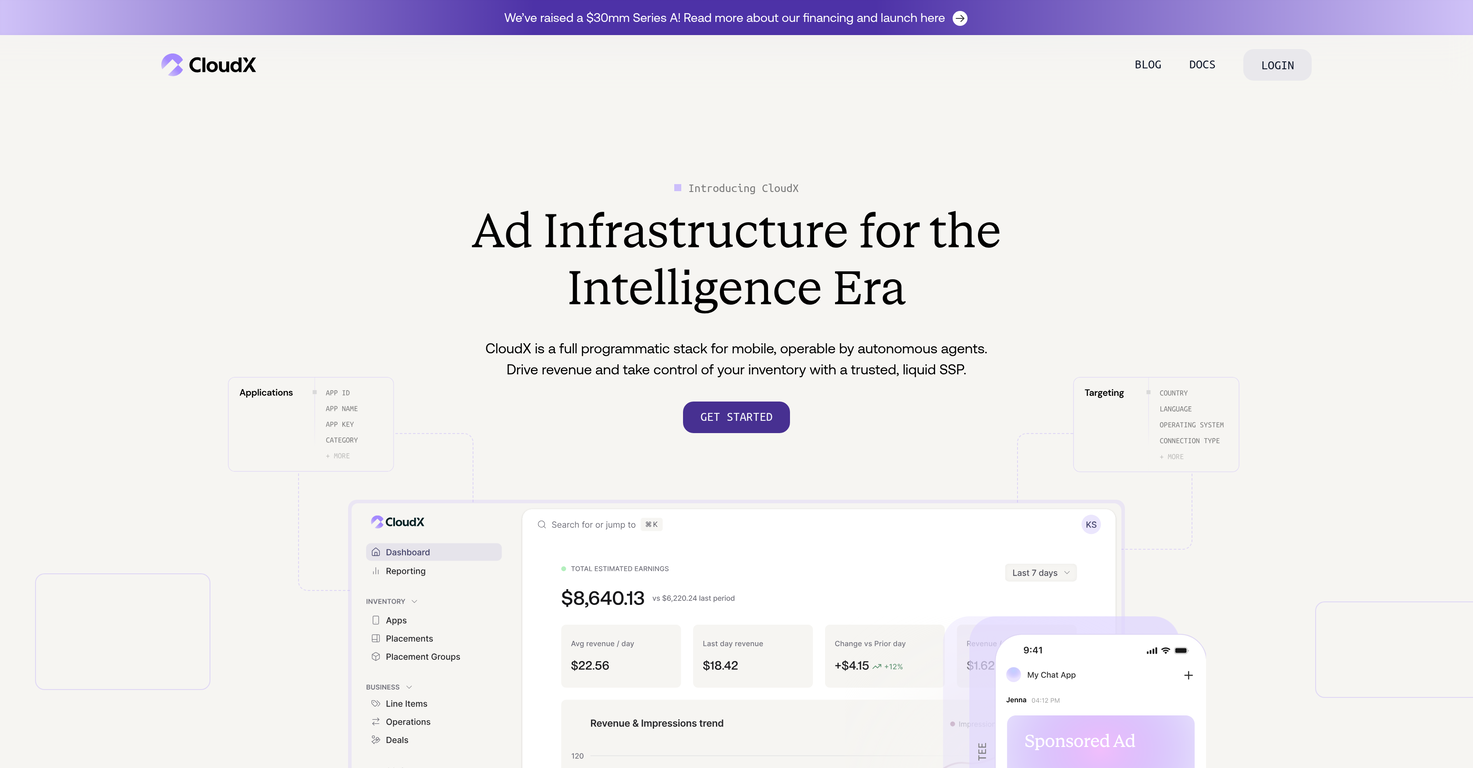
CloudX is a supply-side programmatic platform engineered specifically for mobile as well as AI publishers. The platform aims to augment revenue via AI workflows and liquid marketplace.
CloudX equips publishers with a trusted stack, providing control over inventory and bolstering revenue generation. It is operable by autonomous agents, suggesting easy integration and usage.
The platform integrates with other major platforms like Meta, Unity, Liftoff, Magnite, InMobi, Mintegral, and Moloco. CloudX offers publishers direct control over who they compete with, access to inventory, and the capability to optimize monetization against long-term value.
The platform allows publishers to introduce new monetization ideas with holistic visibility into bids, auction results, and performance. The platform's 'Monetization as Code' approach includes features like line items for multiple auction scenarios, per-request price floors, real-time analytics, log-level access, release tracking, and auction simulation.
It also accommodates non-SDK programmatic buyers, enabling them to compete in the same auction with SDK bidders. This widespread competition offers publishers access to a spectrum of demand, from performance to brand.
And all these while avoiding the addition of more SDKs to their systems. A unique feature of the platform is CloudX's layered AI agent system which automates mobile SDK integration, drastically reducing integration time.
Further, it offers production-ready code promptly, facilitating quick integration for publishers.
Releases



Pricing
Top alternatives
-
miya🙏 10 karmaJan 21, 2026@Didoo AII launched my clean-ingredient deodorant brand solo, juggling inventory, customer emails, and a $2 k monthly ad budget that bled cash on broad “natural deodorant” audiences. After a 10-minute onboarding Didoo rebuilt my campaigns, creatives, and targeting while I packed orders. Inside seven days ROAS climbed from 1.8× to 4.2×, new-customer CPA dropped 38 %, and— for the first time in 18 months—I closed my laptop at 6 p.m. without launching another panic A/B test.
-
 AI-powered ad analysis: Identify winning creative elements instantly.Open




Related topics
 0
0