 Rocket - Think it. Type it. Launch it.
 Mini tools
 Getfloorplan
 Interior AI
 HomeDesignsAI
 REimagineHome
 RoomGPT
 Paintit.ai
 Casavista Dec AI Room Design
 DeHome.ai
 Reroom
 AI Room Styles
 AI Room Planner
 Decory AI
 Room AI
 Collov AI
 Dreamhouse AI
 Oda Studio
 indoor image create ai
 Oda Studio
 Room AI
 Roomsgpt
 So You Want To Be A Writer?
 Minka
Minka
 Ancient AI powered spirits
 somacguffin
 Jvb ai
 Cuty
Cuty
 Superfly Stoner
 MyPrint.ai
 Flowing Dress
 artvisual.ai
 WhimsyWink
 QUILLING ART DESIGNER
 HOPE AI - Famos Artists
 Leonardo Ai Image Generator Alt
 Art drawing, in cityscape
 happy mAI img
 mIsky
mIsky
 Artwork Worthy Of Gallery
 Intricate Canvas
 Artstyle Generator
 image generator
 Lexica Art Generator
 oil painting create ai
 Pre-Raphaelite Style
 SurrealistAI
 ViscOILs
 Metaphor AI Tool







Overview
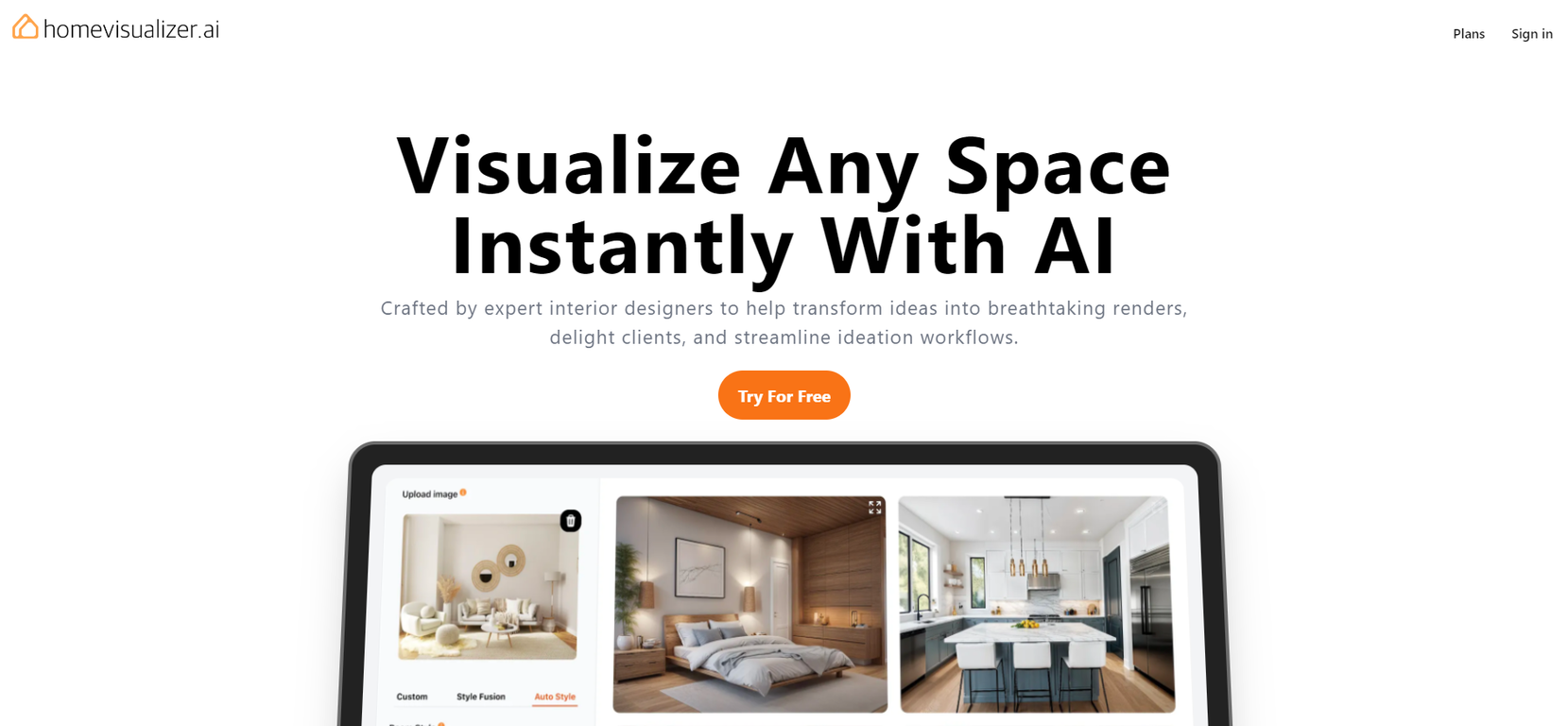
Home Visualizer AI is a tool developed by expert interior designers for transforming spaces into breathtaking visuals. Using its AI-powered components, the tool can blend the elements of an inspiration image with a user's space.
It offers three design modes: Style Fusion, Custom Requests, and Auto Style, catering to various scenarios that users might need. With Style Fusion, you can combine the influences of an inspirational image with your space for the perfect blend.
Custom Request allows users to offer specific instructions to reimagine their room, and Auto Style picks out the latest design styles and applies to the user's space.
The tool also accommodates different inputs such as elevations, photos, renderings, and sketches and turns them into realistic visuals. It was designed primarily for interior designers but is a perfect fit for architects, real estate agents, and homeowners as well.
It offers global support and assures user data protection without any compromise.
Releases

Top alternatives
-
Michael Israel🙏 36 karmaNov 2, 2023@Interior AIDO NOT PAY FOR THIS. TERRIBLE PRODUCT, THERES FREE ALTERNATIVES OUT THERE THAT ARE JUST AS GOOD IF NOT BETTER. TRUST ME.
-
The application arbitrarily adds doors and windows, making the final design unusable. It also changes the view from the window. In the final you are looking at a completely different room than the one you are interested in redesigning.
-
Fun, but weird. It thought my flat screen tv was a window in every render. Runners and bricks mid-floor. Other strangeness.
-
 OpenNew chat-first studio: – Rebuilt the core chat experience as a unified workspace for prompts, image inputs, iterations, and results. – New guided controls (space type, style, settings) to structure pro briefs and reduce trial-and-error. – Faster iteration loop for multi-step edits (repaint, restyle, add/remove items, material swaps). New agentic infrastructure: – Introduced an agent-based orchestration layer that routes each request to the most suitable workflow (from-scratch generation vs photo-based redesign). – Improved context handling across turns to keep revisions aligned with the same scene and direction. – More predictable handling of multi-instruction prompts to reduce “try again” loops. New top-tier model support: – Expanded support for high-quality image generation models to improve photorealism, lighting consistency, and material detail. – Better default model selection behind the scenes based on task complexity and input type. New pro workflow building blocks: – Projects/Collections for saving versions and comparing directions across a single room or a full project. – Pinterest boards as reference inputs for moodboard-guided iterations. – Product Finder updates for matching items from scenes and linking to vendor stores. Performance & stability: – Improved generation responsiveness and general stability across the app.



Related topics













 0
0