 Rocket - Think it. Type it. Launch it.
 Mini tools
 Grapha AI
 DataSquirrel
 Breadcrumb
 Storytell.ai
 ChartPixel
 FindAnomaly
 Vizly
Vizly
 Julius
 ANDRE
ANDRE
 Genius Sheets
 Eliza - Your AI Data Copilot
 Yorph AI
 AskCSV
 Mobser
 DataLine
 Flowtrail AI
 Qquest
 Flexberry AI Assistant
 InsightJini
 Speak Ai
 Younet
 CleeAI
 Avataar's GenAI Creator
 Activepieces
 BigTeam
 Olivya
 Abstra
 DoubleO
 Sreda.ai
 AI Agents
 Pipefy
 Quixl
Quixl
 Cubeo
Cubeo
 Sema4.ai
 Ridvay
 Cognition by Mindcorp
 Tray.io
 UiPath
 Mr David
 Super Amplify
 genset
Splunk AI







Overview
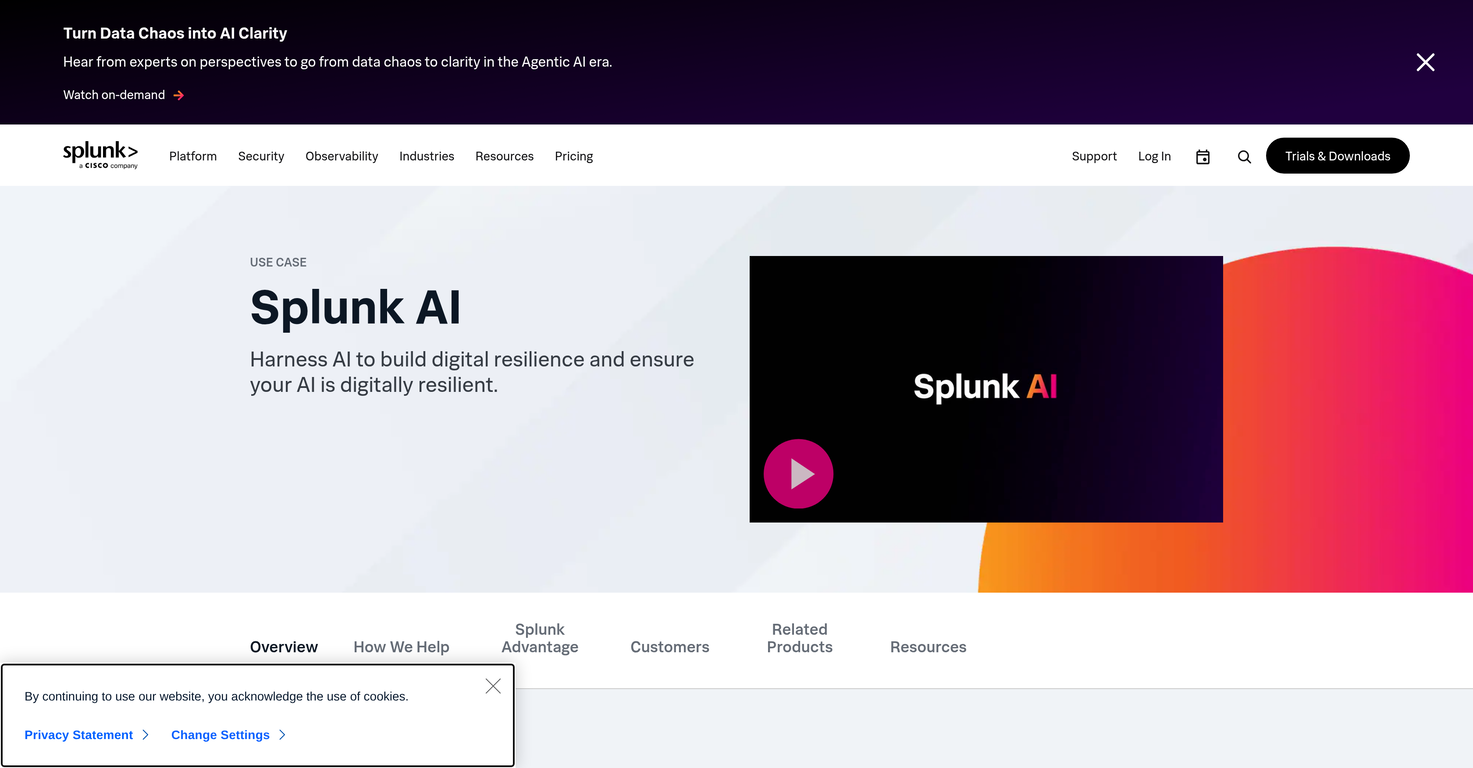
Splunk AI is an Artificial Intelligence (AI) tool integrated with Splunk's security and observability solutions. This tool empowers teams with AI, General AI (GenAI), Machine Learning (ML), and Deep Learning (DL) capabilities, enhancing resilience in digital operations.
Splunk AI caters to a range of use cases such as data optimization, IT modernization, and IT service health analysis that involve managing critical data, storage, and costs, maximizing IT impact through AIOps, and assessing service health from a singular viewpoint.
Splunk AI is also utilized for enhancing security operational centers' productivity by accelerating threat analysis, automating response workflows, reducing alert noise, and managing incident response.
Additionally, Splunk AI contributes to observability practices by providing real-time visibility across different environments, optimizing applications, and alert noise reduction.
These features help troubleshoot faster and diagnose root causes of issues effectively, thus providing complete system visibility and facilitating data-driven decision making.
Besides, Splunk AI Assistant for SPL, powered by generative AI, is offered to users for generating and explaining SPL queries using natural language, which aids in problem-solving, accelerating learning, and advancing to expert-level.
Releases
Top alternatives
-
Harishma Reghu🙏 7 karmaJan 13, 2024@Grapha AISuper useful tool that’s reduced my job by 80%
-
It is the ease of use for me. DataSquirrel is fast, the UI is super intuitive, and the guided analysis feature is highly convenient. I have officially moved from uploading CSV files from Google sheet to DataSquirrel. Within minutes, I can visualize my data and interpreting it becomes super simple.
-
 Automate data work and reporting with AI Agents. No data|coding skills required.OpenSigned up for a pro account for Google Drive integration. Works great! Saves me a lot of manual excel work.
 -
Immo currently best solution if you want to convert / enchant your how-to tutorials to more professional!
-
I really value the sentiment analysis tool—it simplifies understanding customer feedback by picking up on their emotions. Plus, the way it groups comments into topics is super helpful for decision-making.
-
Created a dashboard using my Excel file and it gave insights I didn’t even expect. It can read any kind of Excel file no matter the template. I can even check the accuracy by tracing back which column the data came from Great tool. highly recommended!!







 0
0