 Base44 Superagents-AI agent that does it all
 Mini tools
Taxing
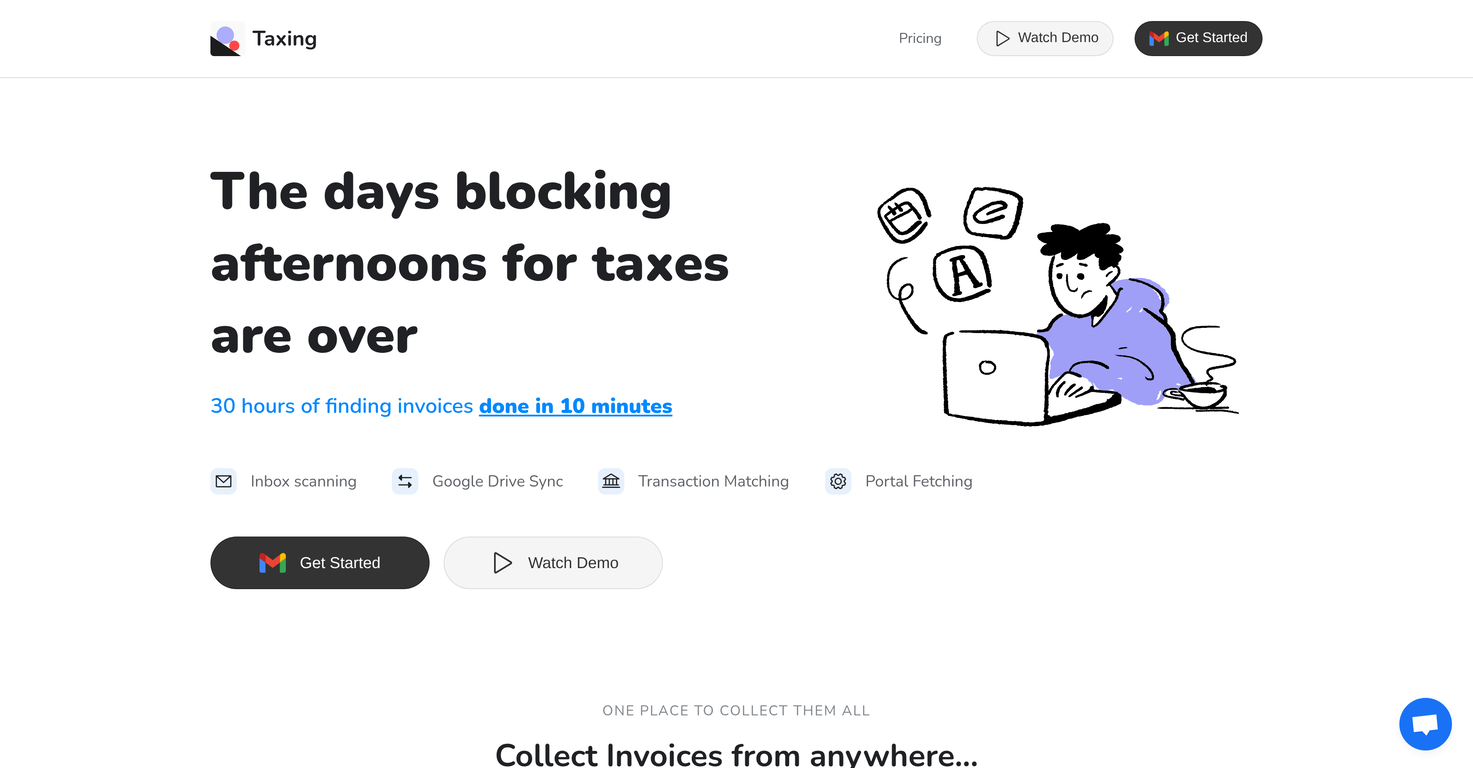
 Automate 30+ hours of tax prep in 10 minutes.
Go to 💸 Invoices
 InvoiceClip
 Tailride
 DocumentPro
 Receiptor
 Procys
 Billy
Billy
 Workist
 Doc Dog
 Booksmate
 InvoiceDataExtraction
 VisionParser
 Intelligent Invoicer
 Solido
 Billabex
 UAE SmartTaxReceipt
 Invoice To XLSX Converter
InvoiceClip
16,161
Tailride
12,913
DocumentPro
6,230
Receiptor
5,315
Procys
3,791
Billy
3,257
Workist
3,045
Doc Dog
2,031
Booksmate
1,367
InvoiceDataExtraction
1,109
VisionParser
1,037
Intelligent Invoicer
941
Solido
315
Billabex
226
UAE SmartTaxReceipt
146
Invoice To XLSX Converter
25
Go to 💼 Business
📢
Marketing
(2236)
🔍
Industries
(954)
💾
Data
(868)
💼
Sales
(701)
💰
Finance
(386)
👔
Management
(306)
💡
Startups
(294)
⚖️
Legal
(250)
👔
HR
(233)
📈
Business strategy
(201)
📅
Meetings
(123)
📊
Product management
(114)
🔒
Security
(80)
📞
Calls
(42)
💻
Tech support
(37)
🤝
Networking
(36)
💻
Virtual employees
(25)
🤖
Enterprise
(15)
🚀
Business innovation
(13)
 Younet
 CleeAI
 Avataar's GenAI Creator
 Activepieces
 BigTeam
 Olivya
 Abstra
 Sreda.ai
 DoubleO
 AI Agents
 Pipefy
 Quixl
Quixl
 Cubeo
Cubeo
 Sema4.ai
 Ridvay
 Cognition by Mindcorp
 Tray.io
 UiPath
 Mr David
 Super Amplify
Younet
147,516
CleeAI
14,287
Avataar's GenAI Creator
4,484
Activepieces
4,268
BigTeam
3,136
Olivya
3,103
Abstra
2,674
Sreda.ai
2,649
DoubleO
2,601
AI Agents
2,516
Pipefy
2,390
Quixl
1,894
Cubeo
1,823
Sema4.ai
1,661
Ridvay
1,435
Cognition by Mindcorp
1,168
Tray.io
834
UiPath
545
Mr David
514
Super Amplify
393
Go to 💰 Finance
💰
Financial advice
(151)
💰
Accounting
(62)
💰
Tax
(43)
💰
Financial management
(43)
💵
Financial analysis
(36)
💰
Financial planning
(20)
📈
Revenue growth
(6)
🏦
Insurance
(5)
📊
Financial forecasting
(5)
🔍
Fraud detection
(5)
💸
Payments
(2)
⚖️
Customer dispute resolution
(1)
 Pecunio AI
 CPA Pilot
 Ramp
Ramp
 Brex AI
 Capeprivacy
 Inwisely
 USD INR OTC
 Billy by Stampli
Pecunio AI
20,756
CPA Pilot
5,798
Ramp
3,524
Brex AI
1,866
Capeprivacy
1,588
Inwisely
1,277
USD INR OTC
50
Billy by Stampli
24
Go to 💰 Accounting
💸
Invoices
(23)
🧾
Receipts
(11)
💵
Bank statement conversion
(2)
 Kick
Kick
 Smart Clerk
 Truewind
 Ledger IQ
 Booke AI
 Jupid
Jupid
 Beancount.io
 Circler
 LiveFlow
 Docyt
Docyt
 Uplinq
 Accounting Standards Analyst
 Accounting Generator
 Accountant
 Xero
Xero
Kick
129,318
Smart Clerk
19,504
Truewind
7,027
Ledger IQ
5,950
Booke AI
5,834
Jupid
3,901
Beancount.io
3,426
Circler
2,204
LiveFlow
2,000
Docyt
1,054
Uplinq
783
Accounting Standards Analyst
269
Accounting Generator
49
Accountant
47
Xero
43
Inputs:
Outputs:
Local
Agent
Automate 30+ hours of tax prep in 10 minutes.
Overview
Featured alternatives
 QuoteCraft AI
UAE SmartTaxReceipt
Booksmate
Receiptor
QuoteCraft AI
UAE SmartTaxReceipt
Booksmate
Receiptor
 ImageToTable.ai
QuoteCraft AI
197
UAE SmartTaxReceipt
146
Booksmate
1,367
Receiptor
5,315
ImageToTable.ai
237
Overview
Taxing.app helps solopreneurs and small businesses focus on building, instead of wasting time on bookkeeping.In 10 minutes, you'll save 30+ hours of tax preparation work and hundreds of euros/£ in accountant fees.
## Features:
- Scans your Gmail inbox and online portals for invoices
- Matches bank transactions to find missing ones
- Exports to Google Drive (and soon accounting tools like SevDesk, QuickBooks, and DATEV)
- Automatically classifies transactions into expense categories
Key Features
- Scan Gmail Inbox For Invoices
- Auto-matching Bank Transactions
- Export To Google Drive & Sheets
- Scan Receipts And Send Via Telegram Bot
- Auto-classifying Expenses
Show more
Releases
Get notified when a new version of Taxing is released
Notify me
November 3, 2025

Oliver Sauter
Initial release of Taxing.
Author

Pricing
Pricing model
Freemium
Paid options from
$50
Billing frequency
One-time
Built With AI

Top alternatives
-
 Pablo Prieto🛠️ 1 tool 🙏 23 karmaMar 11, 2025@TailrideWe use it at Ucademy with 10 gmail accounts and works like a charm


 0
0