Go to section
Sponsor
 Wispr Flow - Don’t type, just speak
🎤 Dictation
Wispr Flow - Don’t type, just speak
🎤 Dictation
The front page of AI.Used by 90M+ humans.

TAAFT Tutorial
Generate image
Tasks
Generate text
Free mode
Trending
Leaderboard
Characters
 Mini tools
New
Featured
Lists
Agents
Requests
Jobs
Map
Newsletter
Starter pack
Free tools
Speech to text
Text translator
Remove background
Settings
Edit profile
My tools
Gallery
Dashboard
Inbox
Get featured
Contact TAAFT
For you
Popular
Job impact index
Most saved
Affiliate program
Submit AI tool
Notification preferences
Glossary
Home
Timeline
My profile
Create tool
Deals
Companies
Models
Robots
Papers
Fundraises
Repositories
Devices
Organizations
Events
Prompt Pack
Merchendise
Credits
APIs
Features
Tools
Countries
Collections
Mini tools
New
Featured
Lists
Agents
Requests
Jobs
Map
Newsletter
Starter pack
Free tools
Speech to text
Text translator
Remove background
Settings
Edit profile
My tools
Gallery
Dashboard
Inbox
Get featured
Contact TAAFT
For you
Popular
Job impact index
Most saved
Affiliate program
Submit AI tool
Notification preferences
Glossary
Home
Timeline
My profile
Create tool
Deals
Companies
Models
Robots
Papers
Fundraises
Repositories
Devices
Organizations
Events
Prompt Pack
Merchendise
Credits
APIs
Features
Tools
Countries
Collections
Mini tools
New
Featured
Lists
Agents
Requests
Jobs
Map
Newsletter
Starter pack
Free tools
Speech to text
Text translator
Remove background
Settings
Edit profile
My tools
Gallery
Dashboard
Inbox
Get featured
Contact TAAFT
For you
Popular
Job impact index
Most saved
Affiliate program
Submit AI tool
Notification preferences
Glossary
Home
Timeline
My profile
Create tool
Deals
Companies
Models
Robots
Papers
Fundraises
Repositories
Devices
Organizations
Events
Prompt Pack
Merchendise
Credits
APIs
Features
Tools
Countries
Collections

▼ Popular
Code generator
Free mode
100% free
Freemium
Free Trial
-
I'll provide a high-level design for the client compliance tracking software and a sample Python implementation. **System Design** The system will consist of the following components: 1. **Client Management**: Store client information, including name, address, and contact details. 2. **Form Management**: Store information about each form, including form name, description, and submission deadlines. 3. **Form Submissions**: Track each form submission, including the client, form, submission date, and status (pending, submitted, approved, rejected). 4. **Compliance Status**: Provide a summary of each client's compliance status, including the forms they need to submit and their current status. 5. **Deadline Reminders**: Send reminders to clients about upcoming deadlines for form submissions. 6. **Reporting**: Generate reports on compliance status, including summaries and detailed lists of form submissions. **Database Schema** The database schema will include the following tables: * **clients**: client information (id, name, address, contact details) * **forms**: form information (id, name, description, submission deadline) * **form_submissions**: form submissions (id, client_id, form_id, submission_date, status) * **compliance_status**: compliance status summary (client_id, form_id, status) **Python Implementation** I'll provide a sample implementation using Python and the Flask web framework. ```python from flask import Flask, render_template, request, redirect, url_for from flask_sqlalchemy import SQLAlchemy from datetime import datetime app = Flask(__name__) app.config["SQLALCHEMY_DATABASE_URI"] = "sqlite:///compliance.db" db = SQLAlchemy(app) class Client(db.Model): id = db.Column(db.Integer, primary_key=True) name = db.Column(db.String(100), nullable=False) address = db.Column(db.String(200), nullable=False) contact_details = db.Column(db.String(100), nullable=False) class Form(db.Model): id = db.Column(db.Integer, primary_key=True) name = db.Column(db.String(100), nullable=False) description = db.Column(db.String(200), nullable=False) submission_deadline = db.Column(db.DateTime, nullable=False) class FormSubmission(db.Model): id = db.Column(db.Integer, primary_key=True) client_id = db.Column(db.Integer, db.ForeignKey("client.id"), nullable=False) form_id = db.Column(db.Integer, db.ForeignKey("form.id"), nullable=False) submission_date = db.Column(db.DateTime, nullable=False) status = db.Column(db.String(50), nullable=False) class ComplianceStatus(db.Model): id = db.Column(db.Integer, primary_key=True) client_id = db.Column(db.Integer, db.ForeignKey("client.id"), nullable=False) form_id = db.Column(db.Integer, db.ForeignKey("form.id"), nullable=False) status = db.Column(db.String(50), nullable=False) @app.route("/") def index(): return render_template("index.html") @app.route("/clients") def clients(): clients = Client.query.all() return render_template("clients.html", clients=clients) @app.route("/forms") def forms(): forms = Form.query.all() return render_template("forms.html", forms=forms) @app.route("/form_submissions") def form_submissions(): form_submissions = FormSubmission.query.all() return render_template("form_submissions.html", form_submissions=form_submissions) @app.route("/compliance_status") def compliance_status(): compliance_status = ComplianceStatus.query.all() return render_template("compliance_status.html", compliance_status=compliance_status) if __name__ == "__main__": app.run(debug=True) ``` **Forms and Templates** Create the following templates: * `index.html`: dashboard overview * `clients.html`: client management page * `forms.html`: form management page * `form_submissions.html`: form submissions page * `compliance_status.html`: compliance status summary page **Forms List** The following forms will be included: * ROC forms: ADT-1, ADT-2, ADT-3, ADT-4, AOC-1, AOC-2, AOC-3, AOC-3A, AOC-4, AOC-5, BEN-1, BEN-2, BEN-3, BEN-4, CHG-1, CHG-4, CHG-6, CHG-8, CHG-9, CRA-1, CRA-2, CRA-3, CRA-4, CSR-1, CSR-2, DIR-10, DIR-11, DIR-12, DIR-03, DIR-03 KYC, DIR-5, DIR-06, DIR-08, DIR-09, DPT-03, FC-1, FC-2, FC-3, FC-4, IEPF-1, IEPF-2, IEPF-4, IEPF-5, INC-12, INC-18, INC-19, INC-2, INC-20, INC-20A, INC-22, INC-23, INC-24, INC-25A, INC-26, INC-27, INC-27A, INC-28, INC-29, INC-4, INC-6, INC-7, MBP-1, MGT-1, MGT-11, MGT-12, MGT-13, MGT-14, MGT-15, MGT-2, MGT-3, MGT-4, MGT-5, MGT-6, MGT-7, MGT-7A, MGT-8, MR-1, MR-2, MR-3, MSC-1, MSC-3, MSC-4, MSME-1, MSME-1, PAS-1, PAS-2, PAS-3, PAS-4, PAS-5, PAS-6, SH-1, SH-2, SH-3, SH-4, SH-5, SH-6, SH-7, SH-8, SH-9, SH-10, SH-11, SH-12, SH-13, SH-14, SH-15, SPICE Part A, SPICE Part B, STK-1, STK-2, STK-3, STK-4 * Other forms: Form-3, Form-4, Form-5, Form-8, Form-11, Form-12, Form-15, Form-22, Form-23, Form-24, Form-25, Form-27, Form-28, Form-31, Form-32, Form LLP BEN2, Form4D **Next Steps** 1. Implement user authentication and authorization. 2. Develop the client management page. 3. Develop the form management page. 4. Develop the form submissions page. 5. Develop the compliance status summary page. 6. Implement deadline reminders. 7. Implement reporting features. This is a high-level design and implementation, and there are many details that need to be addressed. However, this should provide a good starting point for building a client compliance tracking software. This high-level design and sample Python implementation provides a good starting point. However, the implementation details are not sufficient. Could you provide a more detailed implementation in Python, including the following: 1. **Models**: Define the models for Client, Form, FormSubmission, and ComplianceStatus using SQLAlchemy. 2. **Database**: Create the database tables using the models. 3. **Forms**: Define forms for client management, form submissions, and compliance status updates using Flask-WTF. 4. **Routes**: Implement routes for client management, form submissions, and compliance status updates. 5. **Templates**: Provide sample templates for each page. I'll review the detailed implementation and provide feedback. Here's a more detailed implementation: **Models** ```python from flask_sqlalchemy import SQLAlchemy from datetime import datetime db = SQLAlchemy() class Client(db.Model): id = db.Column(db.Integer, primary_key=True) name = db.Column(db.String(100), nullable=False) address = db.Column(db.String(200), nullable=False) contact_details = db.Column(db.String(100), nullable=False) def __repr__(self): return f"Client('{self.name}', '{self.address}', '{self.contact_details}')" class Form(db.Model): id = db.Column(db.Integer, primary_key=True) name = db.Column(db.String(100), nullable=False) description = db.Column(db.String(200), nullable=False) submission_deadline = db.Column(db.DateTime, nullable=False) def __repr__(self): return f"Form('{self.name}', '{self.description}', '{self.submission_deadline}')" class FormSubmission(db.Model): id = db.Column(db.Integer, primary_key=True) client_id = db.Column(db.Integer, db.ForeignKey("client.id"), nullable=False) form_id = db.Column(db.Integer, db.ForeignKey("form.id"), nullable=False) submission_date = db.Column(db.DateTime, nullable=False, default=datetime.utcnow) status = db.Column(db.String(50), nullable=False, default="pending") client = db.relationship("Client", backref=db.backref("form_submissions", lazy=True)) form = db.relationship("Form", backref=db.backref("form_submissions", lazy=True)) def __repr__(self): return f"FormSubmission('{self.client.name}', '{self.form.name}', '{self.submission_date}', '{self.status}')" class ComplianceStatus(db.Model): id = db.Column(db.Integer, primary_key=True) client_id = db.Column(db.Integer, db.ForeignKey("client.id"), nullable=False) form_id = db.Column(db.Integer, db.ForeignKey("form.id"), nullable=False) status = db.Column(db.String(50), nullable=False, default="not started") client = db.relationship("Client", backref=db.backref("compliance_status", lazy=True)) form = db.relationship("Form", backref=db.backref("compliance_status", lazy=True)) def __repr__(self): return f"ComplianceStatus('{self.client.name}', '{self.form.name}', '{self.status}')" ``` **Database** ```python with app.app_context(): db.create_all() ``` **Forms** ```python from flask_wtf import FlaskForm from wtforms import StringField, DateField, SelectField, SubmitField from wtforms.validators import DataRequired class ClientForm(FlaskForm): name = StringField("Name", validators=[DataRequired()]) address = StringField("Address", validators=[DataRequired()]) contact_details = StringField("Contact Details", validators=[DataRequired()]) submit = SubmitField("Submit") class FormSubmissionForm(FlaskForm): client_id = SelectField("Client", coerce=int) form_id = SelectField("Form", coerce=int) submission_date = DateField("Submission Date") status = SelectField("Status", choices=["pending", "submitted", "approved", "rejected"]) submit = SubmitField("Submit") class ComplianceStatusForm(FlaskForm): client_id = SelectField("Client", coerce=int) form_id = SelectField("Form", coerce=int) status = SelectField("Status", choices=["not started", "in progress", "completed"]) submit = SubmitField("Submit") ``` **Routes** ```python @app.route("/") def index(): return render_template("index.html") @app.route("/clients") def clients(): clients = Client.query.all() return render_template("clients.html", clients=clients) @app.route("/clients/new", methods=["GET", "POST"]) def new_client(): form = ClientForm() if form.validate_on_submit(): client = Client(name=form.name.data, address=form.address.data, contact_details=form.contact_details.data) db.session.add(client) db.session.commit() return redirect(url_for("clients")) return render_template("new_client.html", form=form) @app.route("/forms") def forms(): forms = Form.query.all() return render_template("forms.html", forms=forms) @app.route("/form_submissions") def form_submissions(): form_submissions = FormSubmission.query.all() return render_template("form_submissions.html", form_submissions=form_submissions) @app.route("/form_submissions/new", methods=["GET", "POST"]) def new_form_submission(): form = FormSubmissionForm() form.client_id.choices = [(client.id, client.name) for client in Client.query.all()] form.form_id.choices = [(form.id, form.name) for form in Form.query.all()] if form.validate_on_submit(): form_submission = FormSubmission(client_id=form.client_id.data, form_id=form.form_id.data, submission_date=form.submission_date.data, status=form.status.data) db.session.add(form_submission) db.session.commit() return redirect(url_for("form_submissions")) return render_template("new_form_submission.html", form=form) @app.route("/compliance_status") def compliance_status(): compliance_status = ComplianceStatus.query.all() return render_template("compliance_status.html", compliance_status=compliance_status) @app.route("/compliance_status/new", methods=["GET", "POST"]) def new_compliance_status(): form = ComplianceStatusForm() form.client_id.choices = [(client.id, client.name) for client in Client.query.all()] form.form_id.choices = [(form.id, form.name) for form in Form.query.all()] if form.validate_on_submit(): compliance_status = ComplianceStatus(client_id=form.client_id.data, form_id=form.form_id.data, status=form.status.data) db.session.add(compliance_status) db.session.commit() return redirect(url_for("compliance_status")) return render_template("new_compliance_status.html", form=form) ``` **Templates** Create the following templates: * `index.html`: dashboard overview * `clients.html`: client management page * `new_client.html`: new client page * `forms.html`: form management page * `form_submissions.html`: form submissions page * `new_form_submission.html`: new form submission page * `compliance_status.html`: compliance status summary page * `new_compliance_status.html`: new compliance status page This implementation provides a more detailed example of how the client compliance tracking software could be built using Flask and SQLAlchemy. Your implementation provides a good foundation for building the client compliance tracking software. However, I would like to add more functionality to the software, such as: 1. **User Management**: Add user management features, including user registration, login, and role-based access control. 2. **Form Automation**: Automate form submissions by integrating with external APIs or services. 3. **Notifications**: Send notifications to clients and users about upcoming deadlines, form submissions, and compliance status updates. To implement these features, I can leverage libraries like Flask-Login, Flask-Principal, and Flask-Mail. Here's an example of how you could implement user management using Flask-Login and Flask-Principal: **User Model** ```python class User(db.Model): id = db.Column(db.Integer, primary_key=True) username = db.Column(db.String(64), unique=True, nullable=False) email = db.Column(db.String(120), unique=True, nullable=False) password_hash = db.Column(db.String(128)) def set_password(self, password): self.password_hash = generate_password_hash(password) def check_password(self, password): return check_password_hash(self.password_hash, password) def __repr__(self): return f"User('{self.username}', '{self.email}')" ``` **User Registration and Login** ```python from flask_login import LoginManager, UserMixin, login_user, logout_user, login_required, current_user login_manager = LoginManager() login_manager.init_app(app) @login_manager.user_loader def load_user(user_id): return User.query.get(int(user_id)) @app.route("/register", methods=["GET", "POST"]) def register(): form = RegistrationForm() if form.validate_on_submit(): user = User(username=form.username.data, email=form.email.data) user.set_password(form.password.data) db.session.add(user) db.session.commit() return redirect(url_for("login")) return render_template("register.html", form=form) @app.route("/login", methods=["GET", "POST"]) def login(): form = LoginForm() if form.validate_on_submit(): user = User.query.filter_by(username=form.username.data).first() if user and user.check_password(form.password.data): login_user(user) return redirect(url_for("index")) return render_template("login.html", form=form) @app.route("/logout") @login_required def logout(): logout_user() return redirect(url_for("index")) ``` **Role-Based Access Control** ```python from flask_principal import Principal, Permission, RoleNeed principals = Principal(app) admin_permission = Permission(RoleNeed("admin")) moderator_permission = Permission(RoleNeed("moderator")) @app.route("/admin") @admin_permission.require(http_exception=403) def admin(): return "Admin page" @app.route("/moderator") @moderator_permission.require(http_exception=403) def moderator(): return "Moderator page" ``` **Notifications** ```python from flask_mail import Mail, Message mail = Mail(app) def send_notification(subject, recipients, body): msg = Message(subject, recipients=recipients, body=body) mail.send(msg) @app.route("/send_notification", methods=["POST"]) def send_notification_route(): subject = request.form["subject"] recipients = request.form["recipients"] body = request.form["body"] send_notification(subject, recipients, body) return "Notification sent" ``` Please let me know if this implementation meets your requirements or if you need further modifications.
-
Here is an example of HTML code for a simple login form: ``` <!DOCTYPE html> <html> <head> <title>Login Form</title> <style> body { font-family: Arial, sans-serif; } .container { width: 300px; background-color: #f9f9f9; padding: 20px; border: 1px solid #ccc; border-radius: 5px; box-shadow: 0 0 10px rgba(0, 0, 0, 0.1); } </style> </head> <body> <div class="container"> <h2>Login Form</h2> <form> <label for="username">Username:</label> <input type="text" id="username" name="username"><br><br> <label for="password">Password:</label> <input type="password" id="password" name="password"><br><br> <input type="submit" value="Login"> </form> </div> </body> </html> ``` This code creates a basic login form with a username and password input, and a submit button. Note that this code does not include any server-side validation or authentication, it's just a basic HTML form. If you want to add functionality to this form, you will need to add JavaScript code to handle the form submission and validate the input data. You will also need to create a server-side script to handle the form data and authenticate the user. Let me know if you need any further assistance or if you have any specific requirements for the login form.
-
```html <!DOCTYPE html> <html lang="en"> <head> <meta charset="UTF-8"> <meta name="viewport" content="width=device-width, initial-scale=1.0"> <title>Minimal Digital Clock</title> <style> body { font-family: Arial, sans-serif; display: flex; justify-content: center; align-items: center; height: 100vh; margin: 0; background-color: #f0f0f0; } .clock-container { background-color: #fff; border-radius: 10px; padding: 20px; box-shadow: 0 0 10px rgba(0,0,0,0.1); } #clock { font-size: 3rem; font-weight: bold; text-align: center; margin-bottom: 10px; } select { width: 100%; padding: 5px; margin-bottom: 10px; } label { display: flex; align-items: center; justify-content: center; margin-bottom: 10px; } </style> </head> <body> <div class="clock-container"> <div id="clock"></div> <select id="timezone"> <!-- Time zones will be populated dynamically --> </select> <label> <input type="checkbox" id="format-toggle"> 24-hour format </label> </div> <script> const clock = document.getElementById('clock'); const timezoneSelect = document.getElementById('timezone'); const formatToggle = document.getElementById('format-toggle'); // Populate time zone options moment.tz.names().forEach(tz => { const option = document.createElement('option'); option.value = tz; option.textContent = tz; timezoneSelect.appendChild(option); }); function updateClock() { const selectedTimezone = timezoneSelect.value; const use24HourFormat = formatToggle.checked; const now = moment().tz(selectedTimezone); const format = use24HourFormat ? 'HH:mm:ss' : 'hh:mm:ss A'; clock.textContent = now.format(format); } // Update clock every second setInterval(updateClock, 1000); // Update clock when time zone or format changes timezoneSelect.addEventListener('change', updateClock); formatToggle.addEventListener('change', updateClock); // Initial clock update updateClock(); </script> <script src="https://cdnjs.cloudflare.com/ajax/libs/moment.js/2.29.1/moment.min.js"></script> <script src="https://cdnjs.cloudflare.com/ajax/libs/moment-timezone/0.5.33/moment-timezone-with-data.min.js"></script> </body> </html> ``` This code creates a minimal digital clock with the following features: 1. Displays time in 12-hour or 24-hour format 2. Allows selection of any time zone 3. Updates in real-time 4. Has a clean, modern design Key points: - Uses HTML, CSS, and JavaScript for implementation - Utilizes the Moment.js library for handling time zones and formatting - Responsive design that works on various screen sizes - Easy to customize colors and styles To use this code, save it as an HTML file and open it in a web browser. Make sure you have an active internet connection for the Moment.js library to load properly.
-
### Even Number Filter Function #### Function Description The following Python function filters a list of integers and returns a new list containing only the even numbers. #### Code ```python def filter_even_numbers(numbers): """ This function takes a list of integers and returns a new list containing only the even numbers. Args: numbers (list): A list of integers. Returns: list: A list of even integers. """ # Using list comprehension to create a new list with only even numbers # The 'if' condition inside the list comprehension checks if a number is even (i.e., remainder when divided by 2 is 0) even_numbers = [num for num in numbers if num % 2 == 0] # Return the list of even numbers return even_numbers # Example usage if __name__ == "__main__": numbers_list = [1, 2, 3, 4, 5, 6, 7, 8, 9, 10] print("Original List:", numbers_list) print("Even Numbers:", filter_even_numbers(numbers_list)) ``` #### Explanation - The function `filter_even_numbers` takes one argument: `numbers`, which is expected to be a list of integers. - Inside the function, a list comprehension is used to iterate over each number (`num`) in the input list (`numbers`). - The `if` condition `num % 2 == 0` filters out odd numbers, only including numbers that are divisible by 2 (i.e., even numbers) in the new list. - The resulting list of even numbers is then returned by the function. #### Important Considerations - This function assumes that the input will be a list. If the input might be something else, you should add error checking code to handle that. - The function uses list comprehension for conciseness and efficiency. For very large lists, this approach is memory-efficient because it avoids the need to append to a list in a loop.Dua Batool🙏 1 karmaSep 24, 2025@Code Generatoruser friendly and gaves accurate results so for me its 10/10 tool




Featured matches
-
-
-
 First General AI Agency. Designed for long-horizon tasks.Open
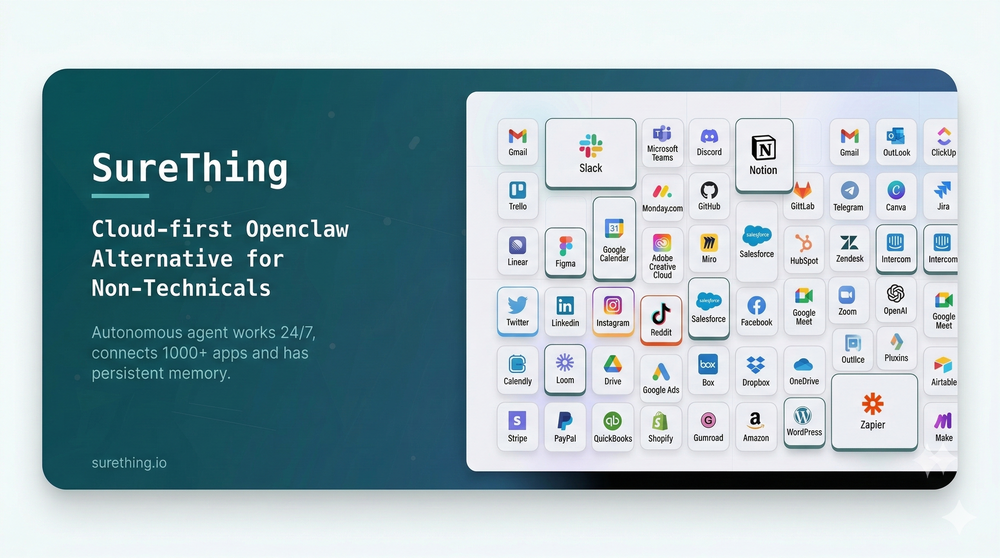 I've put about 30-40 hours into SureThing, and it's seriously been a game-changer, basically acting like a virtual COO for my business!
 -
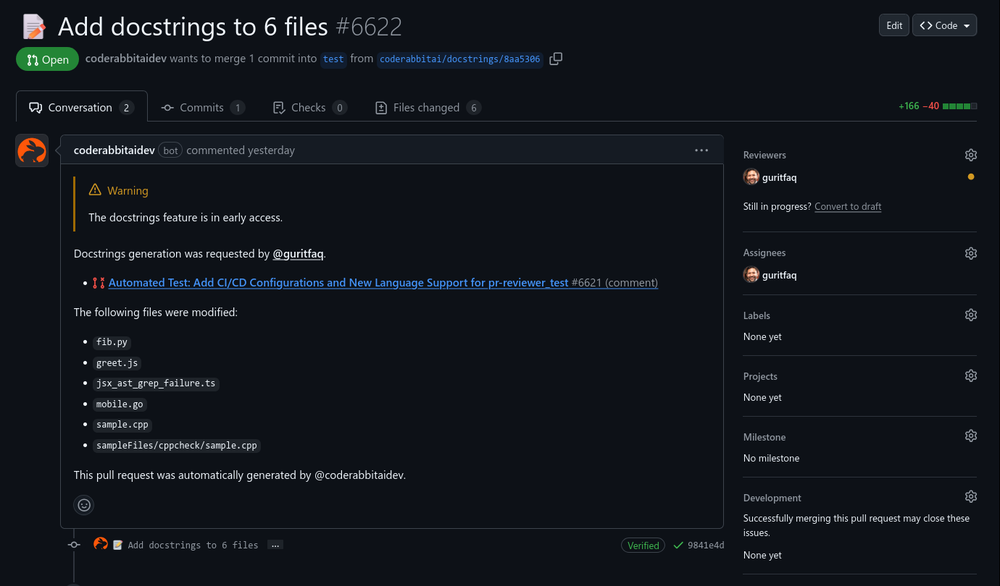 Reducing manual efforts in first-pass during code-review process helps speed up the "final check" before merging PRs
 -
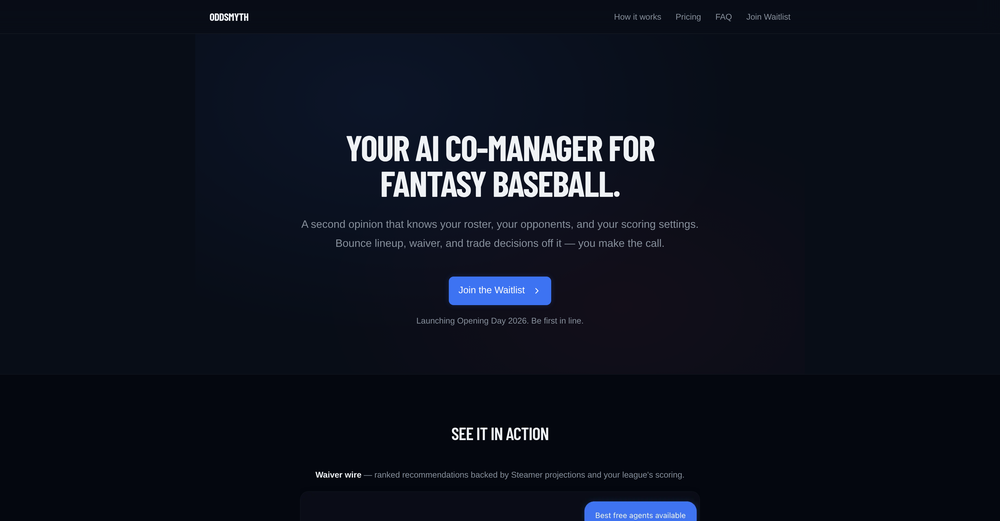 Hey! I'm Kwan, the solo founder behind Oddsmyth. I built this because I play in 2 Yahoo H2H fantasy baseball leagues and was spending 30+ minutes every morning researching lineups, scanning the waiver wire, and evaluating trades. The tools I tried (FantasyPros, Yahoo's built-in recs) all had the same problem: they don't know my league. They give generic advice based on generic rankings. Oddsmyth connects to your Yahoo Fantasy league and actually knows your roster, your opponents, your scoring settings, and who's available on your waiver wire. You can ask it anything in plain English ("who should I start today?", "is this trade worth it?", "who should I grab off waivers?") and it gives you a specific answer with reasoning based on your situation. It's not meant to replace doing your own research. It's a second opinion you can bounce decisions off of when you're torn on a close call or managing multiple leagues and don't have time to dig into every decision. The AI is powered by Claude and uses live data from the MLB Stats API, FanGraphs Steamer projections, and your Yahoo league data. You get 5 free credits to try it. Quick questions (game times, scores, injury checks) are always free. I'd love feedback from anyone who plays Yahoo fantasy baseball. What's working, what's not, what would make it more useful. I'm building this in public and actively improving it based on what real users tell me.
 -
-
 Great tool! Was very helpful in content production
 -

-
 This team took the time to understand the industry, problem and its users and designed a perfectly engineered solution. Kudos.
 -














Other tools
-
Would rate 4.9 if possible, but rounding up to 5 stars because this app truly excels compared to other AI coding tools. Why 5 Stars: Best-in-class AI coding assistance Huge improvements over competitors Actually works for real development Real Impact: I successfully built and published an actual app using this tool - that's game-changing for non-developers like me. Bottom Line: Yes, there's room for improvement, but this is already the top AI coding app available. The fact that ordinary people can create real apps with it says everything. Perfect for anyone wanting to turn ideas into actual apps!
- SponsorWispr Flow - Don’t type, just speak🎤 Dictation
-
I am planning to automate my trading system and customise an agent , I chatted with the support right from the dashboard they answered in 15 mins
-
Hey! My name is Domantas and I invite all fellow solopreneurs, business and product owners to try Hostinger Horizons. Using it is super simple - you are creating a website or application just by prompting - chatting with AI. No struggle, code or design skills are needed. You can literally have your website live in few minutes. Looking forward for your feedback!
-
 Converts JavaScript code to TypeScript.Open
 -
 Give your brand superpowers with automated creation, metrics, and analytics.OpenAs a physician, I barely have time to create content — and hiring an agency would be far more expensive. With ContentsPilot, I can keep my social media active, and whenever I get a moment in my day, I just record what’s needed. The rest of the content is already prepared and organized. It’s become the perfect solution for my busy routine.
 -
 OpenI built Remy to solve a problem I face every day: Newsletter overload 📬 Remy is your personal AI assistant that summarizes all your newsletters into a single digest email. Go from a cluttered inbox to a clear, concise briefing in one go.
 - Didn't find the AI you were looking for?
-
-
-
good for beginners & really awesome features, yet to be integrated within themselves
-
Great tool for engaging customers and repurposing content! I also made a video on it https://youtu.be/cIEUz3bxPRc
-
Love this!! Its so easy to use and has made my life wayyyy easier. It got my whole team set up organized and has helped with every aspect from posting time to entire business structure and accounting!
-
finally don't have to babysit my campaigns at 2am. alex ai actually catches issues before they burn through budget. paused three underperforming ads last night while i was asleep. worth every penny
-
Base44 Superagents is an AI tool that designs personalized AI agents to automate various tasks without requiring any coding. It offers users a platform where they can deploy apps that are built specifically for AI agents.
-
I love ShakespeareAi. After trying other products I landed on their website and it’s the best thing that ever happened to me. At first there were a few problems, but the team has been efficient and very quick in solving them for me, even accepting suggestiona from me.
-
 One-click OpenClaw setup with AI inference included, no token capOpenAwesome idea to have a unlimited token plan tied directly to a managed opnclaw instance. A little bit tricky to get setup without CLi access. but seems to work well once you get past that!
 -
-
-
 Pencil’d Answers Calls, Books Appointments, and Captures Leads when you’re not available.OpenGreat product, helps me run my one-person shop without having to hire a separate assistant.
 -
Easy to start and connect agent to WhatsApp
-
Great tool! And totally free! Directly from haven
-
CodePup AI is incredible — it makes generating professional websites effortless with zero coding required.
-
I would like to ask if is possible to boost APP (APPSTORE) sale.
-
Hi, I am Cristian the founder of Konvertly. I built Konvertly because I was tired of juggling 5 different tools just to send a cold email. A tool for leads, A tool for sending, manually writing intros, forgetting to follow up—it was exhausting and confusing with all the credit systems. I thought: "Why isn't there ONE tool that does all of this?" So I built it. Six months of nights and weekends. Then we soft-launched and got 60 paying customers, which honestly blew my mind. Today's the official launch. If you've ever felt buried in manual prospecting, this one's for you. — Cristian
-
-
Does what it says. Signed up, picked a pre-built agent, live in under a minute. Token savings are noticeable, security is handled, and I don't have to think about Docker or VPS configs anymore. Free tier is enough to know if it works for you. It did for me.
-
I started using Team Pulse recently, and I really like how simple it feels. Managing projects, tasks, and pipelines in one place is smooth, clean, and easy to understand without overcomplicating the workflow.
-
Impressive work from the team at Tented.ai, their approach to AI-driven automation is genuinely next-level.
-
Dope career/job finding tool. Kael gets in depth understanding of your career goals to find the right listings.
-
 AI agent for Jupyter: Generate code, run cells with natural language.Open
 -
Maybe give it another go now? It works just fine for me
-
Spent some time analyzing Intedat. Interesting product, but it reads like another prospecting tool while the real value is automating B2B pipeline generation. That difference could dramatically change perceived value. Happy to share the breakdown if useful.
-
 Your AI-powered partner for smarter, faster, and more productive software engineeringOpencodex is catching up significantly 2026, i have a few bugs that claude code got stuck with lots of back-and-forth, after throwing it to codex it just fixed it with one shot
 -
Zi Wei Astrology makes ancient Chinese destiny analysis much easier to explore. The interface is clean, the chart experience feels structured, and the AI-guided reading helps translate complex Zi Wei Dou Shu ideas into something more practical for modern users. It is especially useful for people who are curious about life path, personality patterns, relationships, and long-term timing cycles but do not know how to read a traditional chart on their own. A strong concept with real potential.
-
 Trust scores, cryptographic proof, and risk assessment for AI agents.OpenWe built Mnemom because we were shipping AI agents into production and couldn't answer a basic question: how do you prove this thing is doing what you told it to? Not monitor. Prove. So we built the proof layer. Cryptographic attestations, trust scores, risk assessment, containment — everything you need to deploy agents you can actually stand behind. It's free to start and open source. We'd love to hear what you think - new features shipping daily.
 -
 Hermes Agent with zero setup, maintenance, or infrastructure management.Open
 -
 Real-time AI-powered Scripture display and note taker that responds to voice.Open
 -
the body mapping is such an underated feature
-
What you’re describing is interesting, but also risky. If users stay for insights but you position around ops efficiency, you’re likely attracting the wrong icp and underpricing the real value. In similar cases, that creates a significant revenue ceiling. Have you tested leading with insight speed / decision advantage instead of scheduling pain?
-
 AI-powered code generator for efficient development.OpenIf you just started using python or coding this could help you a lot! I remember first time searching for a string of code and... it wasnt the most easy task at all.
 -
 Know before you build with institutional-grade startup analysis.Open
 -
 Turn scanned or normal PDF invoices into UAE FTA-ready Excel in minutes.Open
 -
 OpenFun and easy to use. You need to fix some lines by yourself but most of code will write for you!
 -
 AI code assistant: Analyze, explain, and optimize snippets instantly.Open
 -
This tool took a lot of trial and error to get the vibe I was hoping for, and I'm impressed with it so far. Hopefully people get a kick out of it.
-
Web Development and App Building Services Overview As a skilled developer, I can assist with creating websites and building mobile applications. I can also generate code to help with programming tasks. Web Development Services Mobile App Development Services Cross-Platform Mobile Apps: I can also develop cross-platform mobile apps using frameworks like React Native, Flutter, or Xamarin. Mobile App Design: I can create user-friendly and intuitive mobile app designs that meet your specific needs. Programming Services Code Generation: I can generate code snippets in various programming languages, including Python, Java, JavaScript, and C . Programming Language Support: I can assist with programming tasks in a variety of languages, including but not limited to: Bug Fixing and Debugging: I can help identify and fix errors in your code. Example Code Generation Here's an example of a simple "Hello, World!" program in Python: def main(): print("Hello, World!") if __name__ == "__main__": main() Or a simple JavaScript function to add two numbers: function addNumbers(a, b) { return a b; } console.log(addNumbers(2, 3)); // Output: 5 Let me know if you have a specific project in mind, and I'll be happy to assist you. I can create websites, build apps and generate codes
-
 BlogWorkflow AI | Opus 4.6 GPT 5.4 GPT Image 2.0 Supported | Structured SEO Workflow for Individual and ProfessionalFrom fragmented ideas to structured, reviewable 8-step publish-ready SEO content.Open
 -
 Open
Open -
-
 Open
Open -
 Transform programming ideas into crystal-clear pseudocode instantly.Open
 -
 Transform complex programming problems into crystal-clear pseudocode.Open
 -
 Expert in code optimization, delivering refined code with detailed explanations.Open
 -
 Translating code between programming languages, maintaining logic and efficiency.Open
 -
-
 Generates comments and documentation based on your code.Open
 -
 Open
Open -
 Your expert partner in coding, specializing in pair programming and code reviews.Open
 -
 Nuxt coding assistant, with knowledge of the latest Nuxt documentationOpen
 -
 Open
Open -
 Transforms code into legal-style documents with precision.Open
 -
 Your friendly coding expert in Python, JavaScript, and cloud technologies.Open
 -
 Formal, technical expert in programming language design.Open
 -
 Straightforward Python code formatter, ensuring PEP 8 compliance.Open